Behind the Medal: The Real Story of Success
29 November 2026
We see the podium. We see the national anthem, the tears, the raised arms, the confetti stuck to a sweaty shoulder. What we do not see is everything that made that moment possible, and almost none of it is glamorous. The medal is the smallest part of the story. The real story is built in empty training halls at six in the morning, in hospital waiting rooms, in awkward conversations with coaches who are about to be let go, and in the quiet decision to keep going when nobody is watching and nobody believes.
This article is about that hidden architecture. It is written for athletes, parents, coaches, and the simply curious who want to understand what high performance actually requires, why some talented people never make it, and why some apparently ordinary people do. There is no secret formula, but there are patterns. Understanding those patterns will not guarantee a medal, but it will help you make better decisions about training, support, and expectations, whether you are chasing a personal best or guiding someone who is.

The Medal Is a Lagging Indicator
The first thing to understand is that a medal tells you almost nothing about the day it was won and almost everything about the years before it. It is a lagging indicator, the way a company's annual profit reflects decisions made years earlier. By the time an athlete stands on a podium, the outcome was largely determined long before the competition began, in the accumulation of thousands of small choices.This matters practically. If you judge a training program only by results, you are always looking in the rearview mirror. The useful questions are upstream: Is the athlete recovering? Is the training load appropriate for this phase? Is the support system stable? Are the fundamentals being built, or is the athlete surviving on talent and adrenaline?
Consider two sprinters with identical personal bests. One trains six days a week with a coach who adjusts the plan weekly based on sleep, soreness, and mood. The other trains six days a week on a fixed program written in January. On paper they look the same. Over two seasons, the first athlete is far more likely to stay healthy and improve, because the plan responds to reality rather than pretending reality does not exist. The medal, if it comes, will look like luck to outsiders. It will not be luck.

Talent Gets You in the Room. It Does Not Keep You There.
Talent is real. Anyone who has spent time in sport has seen the kid who learns a skill in an afternoon that others chase for a year. But talent is a threshold, not a destiny. It gets you into the room where serious development happens. What keeps you there is something less romantic: consistency, coachability, and the willingness to be bad at things in public.There is a well-worn idea that talent plus hard work equals success. The reality is messier. Talent plus the right kind of hard work, in the right environment, with the right recovery, over enough time, sometimes equals success. Every one of those conditions can fail.
A few misconceptions worth clearing up:
- Misconception: talent is fixed. Skills develop, but so do the physical and psychological traits that support them. A late bloomer is often someone whose development curve was simply slower, not someone who lacked ability.
- Misconception: more training is always better. Beyond a certain point, additional volume produces fatigue faster than adaptation. The art is finding the edge without falling off it.
- Misconception: early success predicts later success. Early winners often face tougher transitions, because the gap between them and their peers closes as everyone matures, and they have never learned to lose.
The practical takeaway: stop asking "how talented is this athlete?" and start asking "is this athlete in a place where their talent can compound?" Environment beats raw ability more often than people admit.

The Invisible Workload: Recovery, Sleep, and the Nervous System
Ask a casual fan what makes a champion and you will hear about discipline, grit, and hours in the gym. Ask an experienced coach and you will hear about sleep. This is not a cliche. Adaptation happens during recovery, not during training. Training is the stimulus; recovery is where the body and brain rebuild.Sleep is the most powerful recovery tool available, and it is free. It consolidates motor learning, regulates hormones involved in repair and mood, and supports decision-making under pressure. An athlete who sleeps eight to nine hours consistently has a genuine advantage over one who sleeps six and compensates with caffeine and willpower. That advantage shows up in reaction time, injury risk, and emotional regulation, all of which matter enormously in competition.
The nervous system deserves more attention than it usually gets. High-level sport is not just muscular; it is a constant negotiation between the sympathetic system (fight or flight) and the parasympathetic system (rest and digest). Athletes who live in a chronically stressed state, whether from overtraining, life pressure, or poor sleep, lose the ability to switch off. Their training quality drops even if their training volume looks fine.
Practical guidance:
- Track sleep duration and quality before adding training volume. If sleep is poor, fix that first.
- Use deload weeks deliberately, not as punishment or afterthought.
- Treat rest days as training days. They are part of the plan, not a break from it.
- Watch for subtle signs of accumulated fatigue: irritability, slower warm-ups, loss of appetite, disrupted sleep, and a resting heart rate that drifts upward.
None of this is exotic. It is just unglamorous, which is exactly why so many people skip it.

Coaching: The Most Underrated Variable
A great coach is not the person with the loudest voice or the longest resume. A great coach is a decision-maker who sees the athlete clearly, adjusts the plan honestly, and communicates in a way the athlete can absorb. That combination is rarer than it should be.There are broadly two coaching styles, and both can work:
- Directive coaching works well for athletes who need structure, clarity, and external accountability. The coach sets the plan and the athlete executes. It is efficient, especially early in development.
- Collaborative coaching works well for experienced athletes who understand their bodies and need autonomy to stay engaged. The coach guides, the athlete contributes, and decisions are shared.
The trade-off is real. Directive coaching can produce fast results but risks dependency and burnout. Collaborative coaching builds ownership but can drift without clear boundaries. The best coaches move between the two depending on the athlete, the phase of the season, and the stakes.
What should you look for in a coach? Not trophies on a wall, but evidence of thinking. Ask how they adjust plans when an athlete is fatigued. Ask how they handle a plateau. Ask what they would change if the athlete had half the available time. The answers tell you more than any credential.
Common mistake: choosing a coach based on the success of their best athlete. That athlete may have succeeded despite the coaching, not because of it. Look at the whole roster. Are athletes improving, staying healthy, and staying in the sport? That is the real scoreboard.
The Support System: Family, Money, and the People Who Say No
No athlete succeeds alone, but the support system is often misunderstood. It is not just encouragement. It is logistics, money, patience, and the willingness to say no.Family. Parents walk a fine line. The parent who pushes too hard can extinguish intrinsic motivation. The parent who never pushes can leave the athlete without structure. The healthiest pattern is warm support combined with clear boundaries: you can quit, but not on a bad day; we invest in this, but not at the cost of your health or education.
Money. Elite development is expensive, and the costs are unevenly distributed. Travel, equipment, coaching, physiotherapy, and time away from work all add up. Families should be honest about what they can sustain. An athlete who feels like a financial burden carries a psychological load that shows up in competition. Planning for the long term, including an exit plan, is not pessimism. It is maturity.
The people who say no. Every serious athlete needs someone in their corner who is not impressed by them. A physiotherapist who pulls them from a competition. A parent who insists on rest. A friend who asks how they are doing, not how training is going. These people protect the athlete from the athlete.
Handling Setbacks: Injury, Slumps, and the Mental Game
Injuries are not exceptions. They are part of the career. The athletes who last are not the ones who avoid injury entirely; they are the ones who manage it well. That means reporting pain early, following rehabilitation honestly, and resisting the urge to return before the body is ready.Slumps are similar. Every athlete hits periods where results stall or regress. The temptation is to change everything at once, which usually makes things worse. A better approach is to isolate variables. Change one thing, measure the response, and give it enough time to show an effect. Patience is a skill, and it can be trained.
On the mental side, two ideas are worth internalizing:
1. Confidence follows evidence. You do not talk yourself into confidence; you build it by doing hard things in training and remembering that you did them. Keep a simple log of sessions where you handled pressure well. It becomes a reference point when doubt shows up.
2. Pressure is a skill, not a personality trait. Athletes who perform under pressure have usually practiced under pressure. Simulate competition conditions in training: crowds, noise, consequences, fatigue. The more familiar the feeling, the less it hijacks you.
What the Podium Does Not Show
The medal ceremony lasts minutes. The story behind it lasts years, and much of it is uncomfortable. There are the competitions where the athlete finished last and cried in a parking lot. There are the seasons lost to injury. There are the coaches who left, the sponsors who did not call back, the friends who drifted away because the training schedule made everything else impossible.There is also the aftermath. Many athletes describe a strange emptiness after achieving the goal they built their life around. This is not ingratitude. It is a normal response to finishing a long, singular pursuit. Athletes who plan for what comes next, whether education, career, or a new role in sport, tend to navigate the transition better than those who do not.
If you take one thing from this article, let it be this: the medal is a byproduct. The real success is the person built along the way, the habits, the resilience, the relationships, the ability to handle both victory and defeat without losing yourself. Those things do not tarnish. They do not get stripped in a doping hearing or lost in a rule change. They stay.
Practical Takeaways for Athletes, Parents, and Coaches
For athletes:- Protect sleep like it is part of your training plan, because it is.
- Keep a simple training log. Patterns you cannot see in the moment become obvious over months.
- Choose coaches who adjust, not just coaches who yell.
- Build an identity outside sport. It will carry you through injury and retirement.
For parents:
- Support the person, not just the performance.
- Be honest about money and time before commitments are made.
- Let the coach coach. Your job is stability, not tactics.
- Watch for signs of burnout: loss of joy, sleep problems, withdrawal from friends.
For coaches:
- Judge your program by athlete health and retention, not only by medals.
- Communicate the why behind the plan. Athletes who understand the reasoning train better.
- Build relationships with the people around the athlete. You are coaching a system, not just a body.
The real story of success is not hidden because it is secret. It is hidden because it is ordinary, repetitive, and slow. That is also why it is achievable. The podium is rare, but the process is available to anyone willing to show up for it, day after day, when no one is clapping.
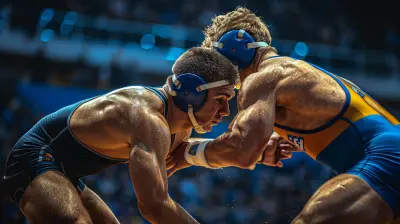
all images in this post were generated using AI tools
Category:
Athlete InterviewsAuthor:
Ruben McCloud