Doping Scandals that Shook the World of Athletics
8 January 2026
Let’s be real – sports are supposed to be about passion, perseverance, and pushing the limits of human potential. But every so often, that inspiring narrative takes a major hit. How? Welcome to the dark side of athletics: doping. Yep, performance-enhancing drugs (PEDs), secret syringes, and behind-the-scenes cover-ups have had their fair share of moments in the spotlight. And when these scandals break out, they don’t just affect one athlete—they send shockwaves through the entire sports world.
In this article, we’re diving headfirst into some of the biggest doping scandals that rocked athletic history. Think of it like pulling back the curtain on a play that went horribly off-script. Ready to take a trip down this controversial path? Let’s get into it.
What Is Doping, Anyway?
Before we start naming names, let’s break down what doping actually is. In the simplest terms, doping is the use of banned substances or methods to enhance athletic performance. Sounds shady, right? That’s because it is.These substances can range from steroids and stimulants to hormones like EPO and HGH. The goal? Boost endurance, increase muscle mass, or recover faster. Athletes turn to these shortcuts when the pressure to win becomes bigger than the game itself.
The World Anti-Doping Agency (WADA) was set up to tackle this very issue. They're like the hall monitors of global sports—keeping athletes in check, testing for banned substances, and trying to keep things fair. But as we’ll see, not everyone plays by the rules.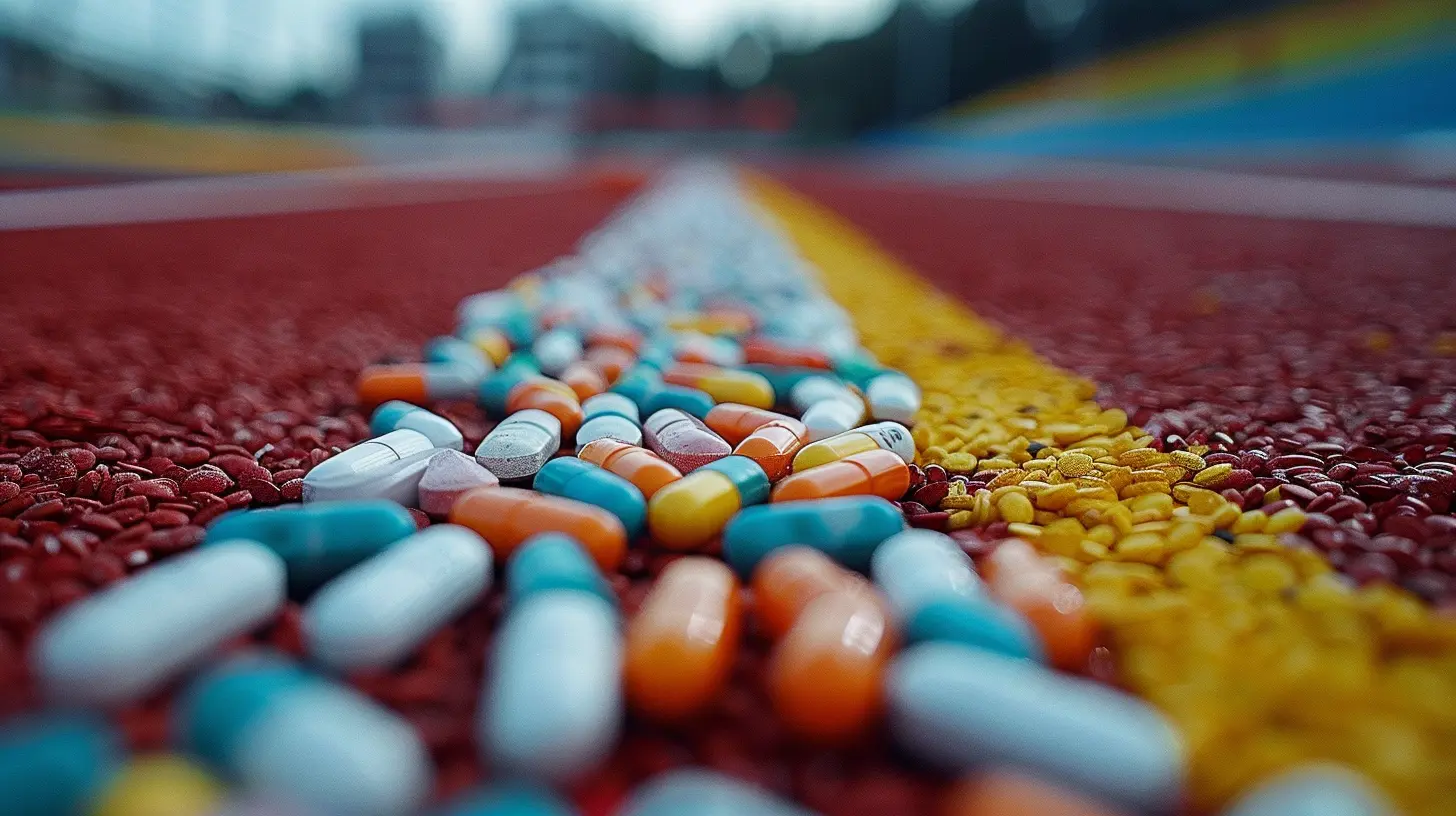
1. Ben Johnson – The 1988 Seoul Olympics Bombshell 🏃💉
Let’s kick things off with one of the most infamous doping scandals of all time. Canadian sprinter Ben Johnson stunned the world at the 1988 Seoul Olympics when he shattered the 100m sprint world record in 9.79 seconds. People were going nuts. He was on top of the world—for about 48 hours.Soon after, Johnson tested positive for stanozolol, a banned anabolic steroid. The gold medal? Stripped. The record? Wiped clean. His reputation? Shattered.
This wasn’t just a fall from grace—it was a full-blown crash landing. The scandal forced the world to take doping in athletics seriously, leading to stricter testing and policies. But it was only the beginning.
2. Marion Jones – From Heroine to Headline 🏅🚫
In the early 2000s, Marion Jones was America’s golden girl. At the 2000 Sydney Olympics, she snagged five medals (three gold, two bronze) and was hailed as unstoppable. But behind that megawatt smile? A double life.In 2007, Jones admitted to using steroids, specifically “the clear” from the notorious BALCO lab. Not only did she lose all her Olympic medals, but she also served six months in prison for lying to federal investigators. Ouch.
Her confession sent a loud and clear message: Even the brightest stars can have the darkest secrets.
3. Lance Armstrong – The Ultimate Fall from Grace 🚴🕵️
Okay, we know this one’s cycling, but it’s too big to leave out. Lance Armstrong wasn’t just a champion—he was a global icon. Seven Tour de France wins. A cancer survivor. The face of Livestrong.But behind that inspiring image? A massive doping conspiracy involving blood transfusions, EPO, and a network of compliance. In 2012, the United States Anti-Doping Agency (USADA) dropped the bomb—Armstrong was stripped of all his Tour titles and banned for life.
His confession to Oprah Winfrey was watched by millions. It was chilling, heartbreaking, and a wake-up call for all of sports.
4. Russia’s State-Sponsored Doping – A Global Scandal 🌍🥶
If there’s one scandal that made jaws drop around the globe, it’s Russia’s state-sponsored doping scheme. This wasn’t just a few bad apples—it was a full-blown, government-backed operation.The scandal broke wide open in 2015, when whistleblowers (including Grigory Rodchenkov, former head of Russia’s anti-doping lab) spilled the beans. They revealed a systematic plan to dope Russian athletes and cover up tests, especially leading up to the 2014 Sochi Winter Olympics.
The result? Russia faced international outrage, a ban from the Olympics, and a huge blow to their national reputation. It was like something out of a spy thriller—but sadly, it was all too real.
5. Justin Gatlin – The Repeat Offender 🏃♂️⛔
Justin Gatlin’s career is a true rollercoaster. The American sprinter won Olympic gold in 2004, but in 2006 he was hit with an eight-year ban (later reduced to four) after testing positive for testosterone.Remarkably, Gatlin came back—and even won gold at the 2017 World Championships, beating Usain Bolt in his final race. Talk about a plot twist.
While some fans admire his resilience, others see him as a symbol of what’s wrong with doping enforcement. Can redemption truly erase the past?
6. The BALCO Scandal – The Lab Behind the Lies 🧪🔍
Remember Marion Jones? Her downfall was linked to an underground lab called BALCO (Bay Area Laboratory Co-operative). But she wasn’t the only one.BALCO was the epicenter of a major scandal in the early 2000s, providing designer steroids like "the cream" and "the clear" to high-profile athletes across multiple sports. Think Barry Bonds, Tim Montgomery, and even NFL players.
The worst part? These drugs were specifically engineered to be undetectable. It was like a cheat code in real life—until investigators cracked the case.
7. Tyson Gay – A Promising Career Derailed 🧬☹️
American sprinter Tyson Gay was once considered a serious rival to Bolt. Fast, consistent, and clearly talented. But in 2013, he tested positive for a banned substance and received a one-year suspension.Though brief, the ban tarnished his legacy. It also cost him and his relay team their Olympic silver medals from 2012.
Gay’s scandal reminds us that even a short stumble can leave a lasting scar in the world of athletics.
Why Do Athletes Dope?
You might be wondering, “Why risk it all?” Let's break it down. Imagine you're training for years, sacrificing sleep, family time, and social life, all for a few seconds on the track. And then there’s a guy next to you, juiced up and beating you with ease.Tempting, isn't it?
The pressure to win is insane. Between sponsors, national pride, and social media fame, it's a recipe for someone to say, “Just this once.” And once the line is crossed, it’s hard to go back.
How Doping Affects the Sport
When an athlete dopes, it’s not just them who suffers. The whole sport takes a hit. True competitors who play fair? They’re robbed. Fans? They feel betrayed. Young athletes? They get the wrong message – that shortcuts are okay.Doping scandals leave a long-lasting stain. It’s like dropping ink in water—hard to clean, impossible to ignore.
What’s Being Done to Fix It?
Organizations like WADA and USADA are constantly updating their testing methods and banned substances lists. But it’s a cat-and-mouse game. For every new test, there’s a new drug or masking agent.There’s also an increasing push for biological passports—a digital record of an athlete’s biomarkers over time, making it harder to cheat without detection.
Education is key too. The more we talk about the dangers and consequences of doping, the more we empower athletes to say no.
Final Thoughts – Keeping Sports Clean Is Everyone’s Job
Doping scandals are a reminder that even in the most inspiring arenas, there’s room for deception. But they also bring change. Each scandal triggers tighter regulations, better testing, and more awareness.So as fans, coaches, or athletes, we all have a role to play. Cheer for the clean athletes. Raise questions when something doesn’t feel right. The integrity of the sport depends on it.
And hey, the thrill of watching someone achieve greatness the old-fashioned way? There’s nothing more powerful.
all images in this post were generated using AI tools
Category:
DopingAuthor:

Ruben McCloud
Discussion
rate this article
2 comments
Morrow Kearns
Doping scandals remind us that behind every record-breaking performance, there's a complex story. It’s a bittersweet reminder that integrity is just as important as victory!
February 21, 2026 at 4:59 AM
Ruben McCloud
Thank you for your insightful comment! Indeed, integrity is crucial in sports, and these scandals highlight the ongoing struggle between ambition and ethics.
Isabella Allen
This article provides a crucial perspective on doping scandals, highlighting their impact on the integrity of athletics.
January 18, 2026 at 4:05 AM
Ruben McCloud
Thank you! I'm glad you found the article insightful. It's essential to address these issues for the future of athletics.