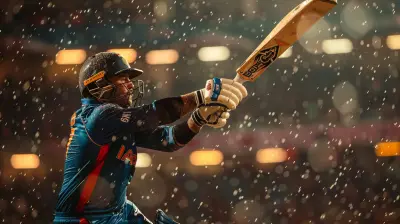
Free Agency Frenzy: The Art of Landing a Mega Contract
16 June 2026
Free agency in sports is like a high-stakes game of poker—except instead of chips, we’re talking about millions of dollars, franchise legacies, and superstar careers. Every season, fans and analysts alike go wild tracking which players will sign jaw-dropping contracts and which teams will pull off blockbuster deals.
But how exactly does a player go from a solid contributor to securing a mega contract? What factors influence these massive paydays? And what role do teams, agents, and the market play in determining these deals? Buckle up because we’re diving deep into the chaotic and thrilling world of free agency.

What is Free Agency?
Before we break down the art of landing a mega contract, let’s get the basics straight. Free agency is when a player’s contract with their current team expires, allowing them to negotiate and sign with any team willing to make an offer.There are typically two types of free agents:
- Restricted Free Agents (RFAs): Teams still hold some control over these players. They can match any offer made by another team to keep them.
- Unrestricted Free Agents (UFAs): These players are completely free to sign with any team, no strings attached.
For the biggest stars, unrestricted free agency is where fortunes are made.

The Ingredients of a Mega Contract
Not every free agent lands a nine-figure deal. Certain factors separate the superstars from the role-players when it comes to securing the bag.1. Elite Performance on the Field
This one’s a no-brainer. Teams are willing to throw bags of cash at players who consistently deliver game-changing performances. Whether you’re dropping 30 points a night in the NBA, leading the league in passing yards in the NFL, or smashing home runs in MLB, elite stats drive up your value.2. The Right Timing
Timing is everything. Entering free agency at the perfect moment—after a career-best season or when teams have extra cap space—can mean the difference between a healthy contract and a record-breaking one.For example, quarterback Patrick Mahomes signed his $450 million contract extension after winning a Super Bowl. Coincidence? Not at all.
3. Market Demand
If the market is flooded with talent at a player’s position, their value might take a hit. But if they’re a rare commodity—say, an elite pass rusher or a shutdown corner in the NFL—their price skyrockets due to demand.The same applies to teams with desperate needs. A team that’s one piece away from championship contention may overpay a bit just to land their guy.
4. Star Power and Marketability
Sports is a business, and teams love players who not only perform but also sell jerseys and bring in fans. A charismatic, highlight-reel player has more leverage when negotiating.Take LeBron James, for example. His contract negotiations are about more than just basketball—his presence boosts ticket sales, jersey revenue, and even TV ratings. That kind of impact is priceless.
5. Savvy Representation (Hello, Agents!)
Behind every massive contract, there’s usually a super-agent pulling the strings. Agents handle negotiations, market their clients, and leverage interest from multiple teams to drive prices up.Scott Boras in MLB and Rich Paul in the NBA have mastered this game, ensuring their clients get every last dollar possible.

The Negotiation Chess Match
Landing a mega contract isn’t just about a team making an offer. It’s a carefully orchestrated dance involving negotiation tactics, strategy, and a little bit of bluffing.Leveraging Multiple Offers
The best free agents rarely go straight to their first offer. Instead, they and their agents shop around, creating a bidding war. If multiple teams are interested, the price tag naturally rises.The Power of Opt-Outs and Player Options
Savvy players negotiate deals with opt-out clauses, allowing them to test the market again while they’re still in their prime. This puts pressure on teams to constantly keep them happy (read: well-paid).For instance, NBA star Kevin Durant has mastered short-term deals that allow him to maximize earnings while maintaining flexibility.
Taking Less for a Better Fit
Now, not every star chases the biggest paycheck. Sometimes, players take slightly less money to join a championship contender or a better system that benefits their career long-term.Think about Tom Brady leaving the Patriots for the Buccaneers, taking a reasonable deal to ensure he had the right supporting cast.

The Risks of Chasing the Bag
While securing a mega contract is the dream, it’s not always a fairytale ending.Crippling Team Budgets
A massive deal can sometimes backfire on a team. If one player eats up too much of the salary cap, it leaves little room to build a balanced roster. This is why teams like the Golden State Warriors had to break up their dynasty—eventually, all of their stars became too expensive to keep together.Injury and Decline
Signing a long-term, mega-money deal is great—until injuries hit or performance declines. If a player underperforms, fans and analysts start labeling them as overpaid, and big contracts become burdens rather than assets.Look at Albert Pujols' decline after signing his massive deal with the Los Angeles Angels. What started as a dream signing became a cautionary tale.
The Ultimate Free Agency Success Stories
Over the years, we’ve seen some of the most insane contracts handed out. Here are a few legendary ones:- Patrick Mahomes (NFL, 2020) – A groundbreaking 10-year, $450 million deal with the Kansas City Chiefs, locking in a generational QB.
- LeBron James (NBA, 2018) – A 4-year, $154 million deal with the Lakers that reshaped the franchise and led to an NBA title.
- Bryce Harper (MLB, 2019) – A 13-year, $330 million contract with the Phillies, securing his legacy as one of baseball’s highest-paid superstars.
These deals weren’t just about money; they were about legacy, marketability, and long-term security.
Conclusion
Free agency is the wildest time of the year in sports, and landing a mega contract is a mix of talent, timing, negotiation, and luck. While some players secure generational wealth, others gamble on themselves and come up short.For fans, it’s all about the drama—tracking rumors, analyzing deals, and debating whether a contract was a bargain or an overpay. And let’s be honest, nothing beats the thrill of waking up to a shocking free agency bombshell on your Twitter feed.
So, next time you see a player sign a jaw-dropping deal, remember: behind that contract are months (if not years) of careful planning, negotiations, and high-stakes decision-making. Free agency isn’t just a frenzy—it’s an art.
all images in this post were generated using AI tools
Category:
Sports ContractsAuthor:

Ruben McCloud
Discussion
rate this article
1 comments
Lucy Marks
Free agency is like a wild game of chess. Teams strategize while players chase dreams. It's exciting to see who will land that mega contract and change their career forever!
June 16, 2026 at 12:34 PM
Ruben McCloud
Absolutely! The strategy and unpredictability make free agency a thrilling spectacle. It's always fascinating to see how everything unfolds.