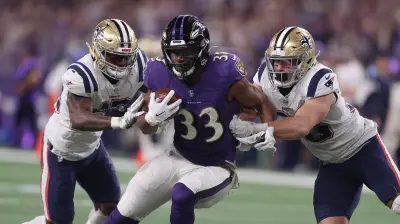
From Underdog to Top Dog: How Teams Overcome the Odds
15 January 2026
Every sports fan loves a good underdog story. It’s the stuff that fuels passion, sparks debate, and makes us believe that anything is possible. Whether it’s a small club defying the odds to win the championship or a long-forgotten athlete making a miraculous comeback, the narrative of the underdog resonates deeply. But how exactly do teams go from being written off by critics to being crowned as champions?
In this article, I’ll take you on a journey where we explore how teams overcome the odds, rise above their limitations, and become the top dogs in their respective sports. Along the way, we’ll dig into some fascinating examples and uncover the strategies that helped these teams achieve greatness. Ready? Let’s dive in!

What Defines an Underdog?
Before we get into the "how," let’s first define what we mean by an underdog. In sports, an underdog is a team or individual considered unlikely to succeed, often due to factors like a lack of resources, talent, or past performance. These teams are typically not the ones the pundits are betting on, and they often enter competitions with low expectations from fans and analysts alike.But here’s the thing—underdogs don’t care about the script. They refuse to be defined by what others expect of them. Instead, they create their own narratives. So, what separates those underdog stories that fizzle out from the ones that end in glory?
The Power of Belief
The first and perhaps most crucial element that drives underdog teams to victory is belief. Without belief, none of the other factors matter. Players, coaches, and even fans need to believe that success is possible, no matter how improbable it seems.Take Leicester City’s miraculous Premier League title win in 2016, for example. The odds were stacked against them at the start of the season—5000/1, to be exact. But the team, under the leadership of manager Claudio Ranieri, didn’t see themselves as no-hopers. They believed they could compete with the bigger clubs, and that belief fueled their work ethic, discipline, and resilience throughout the season.
Belief, in this sense, acts as both a foundation and a catalyst. It’s like the engine of a car; without it, you’re not going anywhere. But once it’s in place, it can drive you through almost any obstacle.

Key Strategies Underdog Teams Use to Succeed
Belief alone isn’t enough, though. Teams that go from underdog to top dog employ a set of strategies that help them capitalize on their strengths and exploit their opponents’ weaknesses. Let’s break down some of the most effective tactics used by these teams.1. Team Unity and Chemistry
One of the most common traits among underdog teams that succeed is an unbreakable sense of unity. While star-studded teams may rely on individual brilliance, underdogs often rely on a collective effort. The players on these teams understand that they’re stronger together, and they lean into that bond to outperform their opponents.Look at the 2004 Greece national football team that shocked the world by winning the European Championship. They didn’t have the star power of France or Portugal, but they had incredible team chemistry. Under coach Otto Rehhagel, the Greek players bought into a defensive strategy that relied heavily on teamwork, discipline, and trust in each other.
It wasn’t pretty; it wasn’t glamorous. But it worked.
2. Smart Game Plans and Tactics
Underdog teams can’t afford to play the same way as their more talented or better-funded opponents. They need to be smarter. This often means adopting unconventional tactics that throw their opponents off their game.Take the 2007 New York Giants, for example. Going into Super Bowl XLII, no one expected them to beat the undefeated New England Patriots, a team that was steamrolling its way to a perfect season. But the Giants, under coach Tom Coughlin, devised a game plan that focused on relentless pressure on Patriots quarterback Tom Brady. They didn’t try to outscore the Patriots in a shootout; they slowed the game down and forced mistakes.
Sometimes, success comes down to doing the unexpected—and doing it well.
3. Embracing the Underdog Mentality
There’s a certain power in being underestimated. When no one expects you to win, the pressure is off, and that can free up a team to play without fear. Underdog teams often use this to their advantage by embracing their role as the underdog.The 1980 U.S. Olympic hockey team, dubbed the "Miracle on Ice," is perhaps the most famous example of this. The U.S. team was made up of college players, while their opponents, the Soviet Union, boasted seasoned professionals. The Soviets were expected to win easily. However, the U.S. team, under coach Herb Brooks, embraced the underdog mentality and played with a sense of freedom and determination that led to one of the greatest upsets in sports history.
By embracing the underdog role, teams can turn what’s perceived as a disadvantage into a psychological weapon.
4. Capitalizing on Momentum
Momentum is a powerful force in sports. Once an underdog team gains confidence and starts stringing together wins, they become difficult to stop. Momentum can carry a team through tough moments, boost their belief, and even intimidate their opponents.Think of the 2011 Dallas Mavericks. They made an unexpected run to the NBA Finals, where they faced the heavily favored Miami Heat, led by LeBron James, Dwyane Wade, and Chris Bosh. After falling behind in the series, the Mavericks found their rhythm, and their momentum became unstoppable, leading to a stunning championship win.
When you’re the underdog, every win feels like validation, and that can fuel players to push even harder.

The Role of Leadership in Underdog Success
It’s impossible to talk about how underdog teams succeed without discussing leadership. A great coach or manager can be the difference between a team that falls short and a team that transcends expectations.1. Vision and Strategy
Good leaders provide a vision that players can rally behind. They’re able to see beyond the limitations that others impose and craft a strategy that plays to a team’s strengths while mitigating its weaknesses.For example, José Mourinho’s Porto team in 2004 wasn’t expected to win the UEFA Champions League, but Mourinho’s vision and tactical acumen turned them into a formidable force. He instilled a belief in his players and created a game plan that frustrated and outwitted more talented opponents.
2. Emotional Intelligence
Great leaders also know how to manage emotions—both their own and those of their players. Sports are emotional, and teams that can keep their focus and composure during high-pressure moments are often the ones that succeed.Phil Jackson, who coached the Chicago Bulls and Los Angeles Lakers to multiple NBA titles, was a master of emotional intelligence. He knew how to manage the egos of superstar players while also keeping role players engaged. His ability to keep his teams calm and focused during tense moments often made the difference in close games.
3. Instilling Resilience
Underdog teams don’t have it easy. They face adversity at every turn, whether it’s injuries, bad calls, or just the sheer weight of expectation. A good leader knows how to instill resilience in their team, so that when things go wrong—and they will—the players have the mental toughness to keep pushing forward.Take the 2021 Milwaukee Bucks, for example. After a series of playoff disappointments in previous years, many doubted whether Giannis Antetokounmpo and the Bucks had what it took to win a championship. But under coach Mike Budenholzer, they developed a resilient mindset, bouncing back from a 2-0 deficit in the NBA Finals to win the title.

Why Do We Love Underdog Stories So Much?
So, why do we find ourselves so captivated by underdog stories? Why do we cheer for the Davids over the Goliaths?There’s something deeply human about the underdog narrative. It speaks to our own struggles, our own moments when we feel like the odds are stacked against us. When we see an underdog team rise above adversity, it gives us hope that we can do the same in our own lives.
And let’s be honest—there’s something incredibly satisfying about seeing the "big guys" get knocked down a peg, right?
Conclusion: From Underdog to Top Dog
The journey from underdog to top dog is never an easy one. It requires belief, strategy, teamwork, and often a little bit of luck. But when all the pieces fall into place, it creates a story that captivates fans and cements a team’s legacy.Whether it’s Leicester City in the Premier League, the 1980 U.S. hockey team, or the 2007 New York Giants, these teams show us that overcoming the odds is possible in sports—and in life. So, the next time you find yourself rooting for the underdog, remember that anything can happen. And isn’t that what makes sports so great?
all images in this post were generated using AI tools
Category:
Team SportsAuthor:

Ruben McCloud
Discussion
rate this article
2 comments
Solenne McInnes
This article compellingly captures the essence of the underdog narrative, highlighting resilience and teamwork. However, it could delve deeper into the psychological aspects behind these transformations. Understanding the mental fortitude that fuels such comebacks adds a crucial layer to the celebration of athletic triumph against the odds.
March 2, 2026 at 5:35 AM
Ruben McCloud
Thanks for your thoughtful feedback! I appreciate your insight on exploring the psychological aspects. It's an important angle that could definitely enhance the discussion.
Holden McIntire
Inspiring journey! Belief and teamwork make champions!
January 15, 2026 at 12:34 PM
Ruben McCloud
Thank you! Belief and teamwork truly are vital in transforming challenges into triumphs.