Game-Changing Plays from the 2026 Finals
16 September 2026
The 2026 Finals will be remembered less for who won and more for how the series tilted on a handful of possessions that looked ordinary in real time and historic on replay. Every championship run produces a few plays that get replayed for decades, but the 2026 edition offered something rarer: a cluster of tactical decisions and split-second executions that changed not just games, but the way teams across the league now think about late-game basketball.
This is not a highlight reel recap. It is a breakdown of the plays that mattered, why they worked, what they reveal about modern playoff basketball, and how coaches, players, and analysts should think about similar situations in the future. If you want to understand why the 2026 Finals unfolded the way it did, you have to look at the mechanics behind the moments, not just the moments themselves.
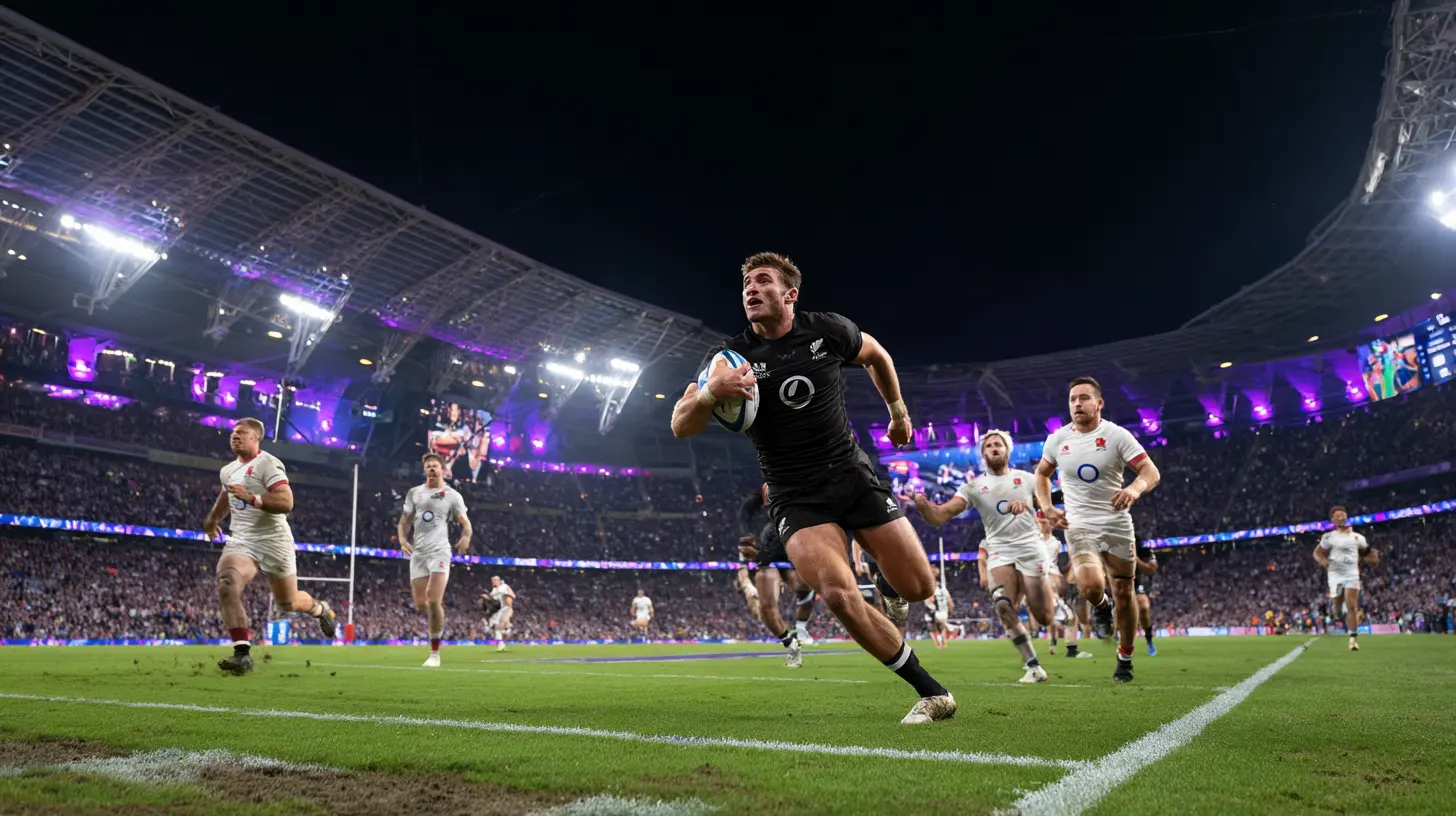
Why These Plays Deserve a Closer Look
Championship series are usually decided by stars making star plays. That happened in 2026, but it also happened in ways that were less obvious than a step-back three or a chase-down block. The most consequential plays of this series came from defensive coverages disguised as gambling, from offensive sets designed to exploit a single mismatch over and over, and from role players making reads that most fans will never notice without a second look.Three factors made 2026 unusual:
First, both teams entered the Finals with elite half-court defenses. That meant transition and early offense became the battleground. Second, both rosters were built around switchable wings, which forced offenses to hunt mismatches through screening actions rather than isolation. Third, rule enforcement around illegal screens and defensive contact tightened over the past two seasons, changing what refs would and would not call in the final two minutes.
Understanding those conditions is essential. A play that looks brilliant in a vacuum might be reckless in a different context. The plays below worked because the context allowed them to work. That distinction matters for anyone trying to apply these lessons to their own team, whether at the professional, college, or high school level.
The Defensive Possession That Redefined the Series
The single most important defensive sequence of the 2026 Finals came in the final ninety seconds of a tied game. On the surface, it looked like a simple switch and contest. Underneath, it was a coordinated trap built on weeks of film study.The Setup
The offense ran its go-to action: a high ball screen with the center, designed to force a switch and create a mismatch in the mid-post. All series long, this action had produced efficient looks. The defense had been living with the mismatch and rotating behind it.In this possession, the defense changed the rule. Instead of switching, the on-ball defender fought over the screen while the big dropped into a shallow drop coverage. The weak-side wing, who had been shading toward the corner all series, crept into the nail area. The result was a pocket of space that looked open for a pull-up jumper but was actually a trap waiting to close.
Why It Worked
The offense read the drop coverage and took the mid-range pull-up, which had been a high-percentage shot for that player all season. The problem was the weak-side wing arriving a half-step earlier than expected. That half-step turned a clean look into a contested one, and the miss led directly to a transition opportunity the other way.The genius was not in the coverage itself. Drop coverage is as old as basketball. The genius was in the timing. The defense had spent three games training the offense to expect a switch, then broke that pattern at the exact moment the offense was most comfortable. That is the difference between a good defensive scheme and a championship defensive scheme: the willingness to abandon your identity for one possession because the situation demands it.
When This Approach Backfires
Trap coverages and late-game coverage changes are high variance. If the offense recognizes the shift and makes the right pass, the defense gives up an open corner three or a layup. Coaches who overuse this tactic get burned because smart offenses adjust after one or two possessions. The rule of thumb: use pattern-breaking coverages once, maybe twice, in a game. Use them more and you are no longer breaking patterns, you are establishing new ones the offense can exploit.
The Offensive Counter That Answered Back
The opposing team's answer in the following game became the second game-changing play of the series. It was not a single shot. It was a structural adjustment to how they initiated offense.Shifting the Point of Attack
After getting stymied by the drop coverage and the nail help, the offense moved its initiation point from the top of the key to the wing. This mattered for two reasons. First, it changed the angle of the ball screen, making it harder for the defense to load up on the weak side. Second, it put the passer in a better position to hit the short roll passer, who could then attack a rotating defense with a four-on-three advantage.The result was a series of possessions where the defense could not decide whether to switch, drop, or blitz without giving up something. That indecision is the goal of any good offensive adjustment. You are not trying to beat a coverage. You are trying to make the defense play a coverage it has not practiced enough.
The Role Player Who Made It Work
The adjustment only functioned because a specific role player, a forward who had averaged modest numbers all season, made consistent decisions as the short roll passer. He did not force shots. He did not turn the ball over. He made the simple read, over and over, until the defense cracked.This is one of the most underrated elements of playoff basketball. Stars draw attention. Role players convert attention into points. The 2026 Finals were decided in part by which team's role players could handle four-on-three decisions under pressure. That is a skill that does not show up in box scores but shows up in film rooms and in the plus-minus column.
Practical Takeaway for Coaches
If you are building a late-game offense, do not just design actions for your best player. Design actions that put a competent decision-maker in a four-on-three situation. That means drilling short roll reads, corner spacing, and one-more passing until they are automatic. Teams that skip this step in practice tend to freeze in the fourth quarter of playoff games.
The Transition Play That Broke the Series Open
Game 5 turned on a transition possession that lasted less than four seconds. It was the kind of play that gets lost in a box score but changes a series.Reading the Rebound Before It Happens
The guard who started the break did not wait for the rebound to land. He leaked out as soon as the shot went up, reading the shooter's form and the positioning of the bigs. That is a gamble. If the other team grabs an offensive rebound, you are playing four-on-five on defense. But the guard had studied the opposing center's rebounding tendencies all series and knew that when the center was pushed off the block, the rebound was likely to bounce long.The ball came off the rim long, the guard collected it in stride, and within three dribbles the defense was in a scramble. The resulting layup plus foul effectively ended the game.
The Risk-Reward Calculation
Leaking out early is a calculated risk. It works when you have a guard who can read shooters and rebound angles, and when your bigs can hold their own on the defensive glass. It fails when you are facing a team that crashes the offensive boards hard, or when your guard guesses wrong and gives up a second-chance opportunity.The lesson is not "always leak out." The lesson is "know your personnel and your opponent." A team with a dominant offensive rebounding big should almost never gamble on early transition. A team with a guard who has elite anticipation can afford to take that risk once or twice a game. The 2026 Finals were decided by a team that understood exactly which risks it could afford.
The Inbound Play That Everyone Will Copy
Late-game inbound plays are a genre unto themselves. The 2026 Finals produced one that will be stolen by every coach at every level for the next several years.The Disguise
The play started in a box formation, which normally signals a simple catch-and-shoot or a lob at the rim. Instead, the inbounder faked the lob and hit a shooter coming off a staggered back screen on the weak side. The defense, conditioned to protect the rim, was a step late.What made it work was not the design. It was the sequencing. The same team had run a lob out of the same formation earlier in the game, and it had scored. That earlier success was the setup. The defense remembered the lob. They overplayed it. The back screen was the counter.
Why Inbound Plays Are So Valuable in the Playoffs
In the regular season, inbound plays under the basket with less than five seconds left are relatively rare. In the playoffs, they happen constantly because games are close and defenses are stingy. A team that can generate one or two easy buckets per series off inbound plays gains a meaningful edge. That edge often decides a game, and one game often decides a series.Common Mistakes With Late-Game Inbounds
The biggest mistake coaches make is over-designing. Elaborate inbound plays with multiple options and misdirections often break down because players cannot process that much information in a high-pressure moment. The best inbound plays have one primary action and one counter. The 2026 Finals play had exactly that: lob, then back screen. Simple enough to execute, sophisticated enough to fool a defense that had seen the first option.The second mistake is failing to practice the counter as much as the primary. Defenses in the playoffs will take away your first option. If your players have not drilled the counter until it is reflexive, they will panic and force something that is not there.
The Defensive Rebound That Was Not a Rebound
One of the most overlooked plays of the series was a defensive possession where a guard boxed out a center. Not switched onto him. Not fronting him. Actually boxed him out, using leverage and timing to seal him off the glass.Why This Matters More Than It Sounds
Offensive rebounding is one of the most reliable predictors of playoff success. Teams that get second-chance points win close games. Teams that give them up lose them. Most of the attention goes to big men, but guards who commit to rebounding change the math. A guard who grabs four or five defensive rebounds a game effectively adds possessions without changing the rotation.The play in question came at a moment when the opposing team had been feasting on the offensive glass. The guard's box-out was not flashy. It was a small, physical, technically sound play that prevented a putback. That putback would have cut the lead to one. Instead, the possession ended, and the other team scored on the other end.
Teaching Points for Coaches
Guards often neglect box-outs because they are taught to leak out for transition. That trade-off is real. You cannot both crash the defensive glass and sprint out on every possession. The solution is situational: identify the moments when the other team is most likely to crash, and commit your guards to rebounding on those possessions.The 2026 Finals offered a masterclass in this kind of situational discipline. The team that won did not out-rebound its opponent by a wide margin. It won the rebounding battle in the specific minutes that mattered most.
The Shot That Should Not Have Gone In
Every Finals has a shot that defies logic. In 2026, it came on a contested, off-balance three from the top of the key with the shot clock expiring.It is tempting to call this luck. It was not. The shooter had spent the entire series hunting that exact situation: a switch onto a slower defender, a step-back to create space, and a release point high enough to avoid the contest. The shot went in because the shooter had practiced the mechanics of that specific shot thousands of times.
The Difference Between a Bad Shot and a Prepared Shot
Analytics have taught us to classify shots by location and efficiency. That framework is useful, but it can mislead. A mid-range pull-up is generally a low-efficiency shot. In the hands of a player who has mastered it and can generate it on demand, it becomes a weapon. The 2026 Finals featured multiple examples of this principle.The lesson for players and coaches is not to ignore analytics. It is to understand that shot quality is a function of both location and the shooter's ability to generate and convert that location under pressure. A team full of players who can only shoot corner threes and layups is easier to defend than a team with one or two players who can reliably score from the mid-range when the defense takes away the rim and the arc.
What the 2026 Finals Reveal About Modern Playoff Basketball
Stepping back, several themes emerge from these plays.First, playoff basketball rewards teams that can shift identity. The team that won the 2026 Finals did not win by executing its system better than the other team. It won by breaking its own system at the right moments. That requires trust between coaches and players, and it requires a roster comfortable with multiple coverages and multiple offensive looks.
Second, role players matter more than ever. The days of hiding a non-shooter or a non-decision-maker in the playoffs are over. Defenses will find him and attack him. The 2026 Finals were decided in part by which team's supporting cast could handle pressure.
Third, small plays compound. A box-out here, a transition read there, a well-timed inbound play. None of these are highlight-reel material on their own. Together, they decide championships.
Practical Recommendations for Teams and Coaches
If you want to apply the lessons of the 2026 Finals to your own program, here is where to start.- Build a small library of pattern-breaking coverages. Practice them enough that players can execute them without hesitation, but save them for moments when the offense is comfortable.
- Drill short roll decisions every week. Four-on-three offense is a skill, and it decays without repetition.
- Teach guards to rebound situationally. Identify the possessions where crashing the glass matters most, and commit to them.
- Design inbound plays with one primary action and one counter. Practice the counter as much as the primary.
- Develop at least one mid-range scorer who can generate a shot when the defense takes away the rim and the arc.
- Study your opponent's tendencies, not just their plays. The 2026 Finals were won by teams that knew what the other team would do before they did it.
Common Misconceptions to Avoid
One misconception is that championship plays are improvised. In reality, most of them are rehearsed. The improvisation is in the timing, not the action.Another is that defense wins championships and offense is secondary. Both matter, but the 2026 Finals showed that defense creates offense. The best defensive possessions of the series directly produced the easiest offensive opportunities.
A third misconception is that star power alone decides series. Stars matter, but the 2026 Finals were decided by which team's stars trusted their teammates in the biggest moments. That trust is built over months, not minutes.
Final Thoughts
The 2026 Finals will be studied for years, not because of a single iconic moment, but because of how many small, decisive plays stacked on top of each other. The defensive coverage change. The offensive adjustment. The transition gamble. The inbound counter. The box-out. The contested shot.None of these plays exist in isolation. They are products of preparation, personnel, and situational awareness. That is what makes them game-changing. They were not accidents. They were choices, made under pressure, by teams that had done the work to make those choices possible.
For anyone who wants to understand playoff basketball at a deeper level, the 2026 Finals offer a blueprint. Study the plays. Study the context. Then ask yourself what your team would have done in that moment, and whether you would have been ready.
all images in this post were generated using AI tools
Category:
Championship ReviewsAuthor:

Ruben McCloud