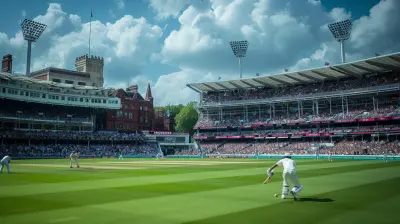
How Player Performance Changes in Empty Stadiums
29 October 2026
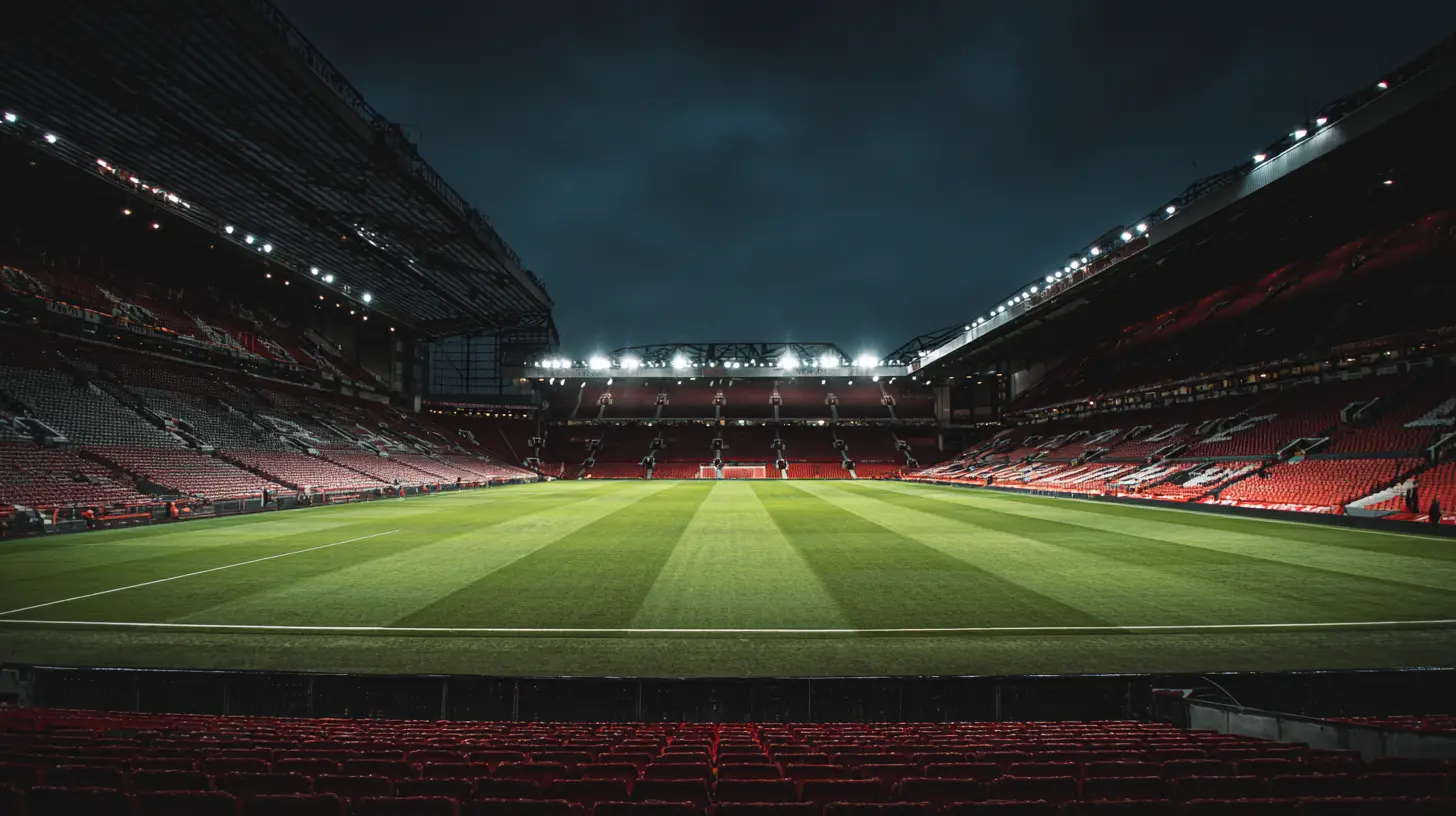
When competitive sport returned after the global shutdowns of 2020, something strange happened. Goals flew in, home teams stumbled, and athletes talked about a silence they had never experienced. The stands were empty, yet the games felt different in ways that were hard to name at first. Coaches noticed it. Players felt it. Analysts scrambled to measure it. What emerged was a rare natural experiment: thousands of matches played in front of nobody, offering a window into how much of performance depends on the crowd itself.
This article is about that window. Not just what happened, but why it happened, what it means for teams and players going forward, and where the popular narratives get it wrong. If you coach, analyze, or simply watch sport closely, understanding the crowd as a performance variable changes how you read the game.
The Stadium Is Part of the Playing Environment
Most discussions of performance treat the crowd as atmosphere, a nice backdrop. That framing misses something important. A stadium full of people is an active input into the match: it changes what players hear, how they communicate, how referees decide, how much pressure they feel, and how much energy they can draw on when their legs are heavy.Remove that input and you have not simply removed noise. You have changed the information environment, the emotional environment, and the social environment all at once. That is why empty-stadium matches were never a clean control group. They were a different sport played by the same people.
What the Crowd Actually Provides
Think of the crowd as supplying four distinct things:1. Sensory feedback. Players use sound to track teammates, opponents, and the ball. A defender calling a switch, a goalkeeper organizing a line, a point guard calling a play. Noise both drowns this out and, paradoxically, provides orientation.
2. Emotional fuel. Adrenaline, arousal, and motivation are partly social. Cheering and jeering are contagious. Empty stands remove the contagion.
3. Pressure and consequence. A crowd makes mistakes feel public. That raises stakes and, for many athletes, sharpens focus.
4. Referee influence. Officials are human. Crowd noise and home support can subtly shift marginal decisions, whether through conscious bias or unconscious pressure.
Each of these interacts with the others. You cannot isolate one without disturbing the rest. Keep that in mind whenever you see a headline claiming empty stadiums "proved" that home advantage is a myth.
Home Advantage: What Actually Disappeared
The most repeated claim from the empty-stadium era is that home advantage vanished. The truth is more textured.Home advantage was never one thing. It is a bundle of factors: travel fatigue for the away team, familiarity with the pitch and conditions, referee psychology, and crowd support. When crowds disappeared, the parts of home advantage tied to the crowd weakened, but the parts tied to travel, routine, and field familiarity remained. Teams still slept in their own beds. They still knew the bounce of the surface. They still avoided long journeys.
So the pattern that emerged across many leagues was not the disappearance of home advantage but its reduction, and the reduction was uneven. Some leagues saw home win rates fall noticeably. Others saw smaller shifts. The variance itself is the lesson: the crowd's contribution to home advantage depends on the sport, the league, the size and behavior of the crowd, and how much of the away team's disadvantage was travel rather than atmosphere.
A Practical Takeaway for Coaches
If you are preparing a team, do not treat home advantage as a fixed bonus. Treat it as a set of levers. Which levers matter most for your team? If your players rely on crowd energy to press high, you need a plan for flat environments. If your edge at home comes from pitch familiarity, that edge survives even in silence. Audit your own home record and ask which factors are actually driving it. Most teams never do this, and they pay for it in neutral-venue matches, cup finals, and behind-closed-doors fixtures.
Communication and Cognitive Load
Here is the effect that players mentioned most often: you can hear everything. The ball, the boots, the breathing, the bench, the coach. For some players this was liberating. For others it was unnerving.Why Hearing Everything Is Not Automatically Better
Communication in team sport is a two-way channel. The crowd masks some messages but also masks distractions. In an empty stadium, every instruction is audible to opponents too. A captain's tactical instruction, a coach's shouted adjustment, a goalkeeper's positioning call. All of it becomes public. Teams that adapted quickly learned to use hand signals, coded language, and pre-planned patterns. Teams that did not found their tactical adjustments leaking to the other side.There is also the cognitive load question. In a loud stadium, players rely on automatized habits and visual cues because sound is unreliable. In a quiet stadium, sound becomes reliable, and players who are used to scanning visually may suddenly have more information than they know what to do with. That sounds like an advantage, but information overload is real. More input does not always mean better decisions. It means more decisions.
Practical advice: If you train in loud conditions all the time, schedule some sessions in near silence to build the habit of using audible cues deliberately. If you train in quiet conditions, simulate crowd noise so players do not depend on silence. The goal is not to prefer one environment but to be fluent in both.
The First-Touch and Rhythm Effect
Players across sports reported that the game felt faster in empty stadiums, even though the clock and the pace of play were largely unchanged. Why? Because rhythm cues shifted. In a packed arena, the crowd noise creates a kind of tempo, a swell and ebb that players sync to. Remove it and the internal clock recalibrates. Some players found their timing sharper. Others found it harder to sustain intensity between moments of action.This is why warm-up routines and between-play rituals matter more in quiet environments. Without external rhythm, players have to generate their own. Teams that built deliberate routines, a specific cadence for restarts, a consistent pre-serve routine, a set pattern for free kicks, adapted faster.
Arousal, Pressure, and the Paradox of Silence
Sport psychology has long discussed the inverted-U relationship between arousal and performance: too little arousal and you are flat, too much and you tighten up. The empty stadium is a natural experiment in arousal manipulation, and the results were not uniform.For Some Players, Silence Was a Gift
Athletes who struggle with anxiety in front of large crowds often performed better without them. The absence of jeering removed a source of rumination. Free-throw shooters, penalty takers, and golfers reported feeling calmer. For these players, the crowd was a tax on attention, and removing it freed cognitive resources.For Others, Silence Was a Drain
Athletes who feed on crowd energy found the opposite. Sprinters, boxers, and footballers who thrive on spectacle described empty venues as flat, lifeless, and hard to get up for. The crowd was their fuel, and without it they had to manufacture motivation from within. Some could. Some could not.This is the single most important practical insight from the empty-stadium era: the crowd is not universally helpful or harmful. It is a moderator of performance, and its effect depends on the individual athlete's arousal profile. A coach who ignores this will misjudge players in both directions.
How to Apply This
- Profile your athletes. Ask them directly: do you perform better with noise or without? Their self-report is imperfect, but it is a starting point.- Build arousal routines that do not depend on external noise. Breathing protocols, cue words, physical rituals. These are portable.
- Practice in both conditions. A player who has only ever performed in front of crowds is untested in silence, and vice versa.
Referee Decisions and the Quiet Whistle
One of the more robust patterns discussed in the empty-stadium era involved officiating. With crowds absent, some studies and league analyses suggested that home-team penalty and disciplinary advantages narrowed. The reasoning is intuitive: referees are influenced, consciously or not, by crowd pressure on marginal calls. Remove the crowd and the pressure softens.Two cautions here. First, the effect size varied widely and was not universal. Second, referee behavior is also shaped by player behavior, and players behave differently without a crowd. A home player who might have appealed dramatically to a roaring crowd may appeal less when the appeal lands in silence. So the causal chain runs through both the official and the players.
What this means for teams: Do not build tactics around expected referee bias. Build them around decision quality. In quiet stadiums, marginal calls may be more neutral, which rewards teams that create clear, unambiguous advantages rather than relying on the dark arts of crowd pressure.
Sport-by-Sport Differences
The crowd's role is not the same across sports, and treating it as a single phenomenon leads to bad conclusions.Football (Soccer)
Football is highly continuous, low-scoring, and heavily dependent on communication across a large field. Empty stadiums changed the auditory landscape dramatically. Players could hear coaching from the touchline, which some found helpful and others found distracting. Home advantage reductions were reported in several leagues, though the size varied. Set-piece routines became more audible and therefore more predictable, which is why some teams switched to visual signals.Basketball
Basketball is intimate, high-scoring, and played in arenas where crowd noise is constant and close. The free-throw line is the classic pressure laboratory. Some players shot better without crowds, some worse. The bigger effect may have been on defensive communication and on the emotional intensity of runs. A crowd can will a team through a comeback. Without it, comebacks require internal leadership.Tennis and Individual Sports
In tennis, the crowd is silent during points anyway, so the change was mostly in the between-point atmosphere and the sense of occasion. Players who rely on crowd support between points felt the loss. Players who prefer isolation felt relief. The lesson transfers to any individual sport with a rhythm of action and rest.American Football and Other Stop-Start Sports
In sports with frequent stoppages, the crowd functions as a communication weapon, especially for the home defense trying to disrupt the away offense's cadence. Empty stadiums removed that weapon entirely. The result was cleaner communication for both sides, which tended to favor precision offenses and disciplined teams.The Common Thread
Across all of them, the crowd matters most where it intersects with communication and arousal. Sports with heavy verbal coordination and high emotional swings are most affected. Sports with fixed rhythms and individual focus are least affected. Use this as a lens when evaluating any claim about empty-stadium effects.What the Data Can and Cannot Tell Us
The empty-stadium period generated a wave of statistical analysis, and some of it was excellent. Some of it was not. Here is how to read it critically.Selection and Context Problems
Matches played without crowds were not randomly assigned. They clustered in specific periods, under specific health protocols, with compressed schedules, unusual travel arrangements, and players returning from layoffs. Any of these could drive performance changes independent of the crowd. A drop in home wins might reflect fixture congestion, not silence.Small Samples and Noise
Many leagues played only a partial season without crowds. Penalty counts, red cards, and other rare events have high natural variance. A shift from three home penalties to one in a small sample is not strong evidence of anything. Be wary of dramatic claims built on tiny numbers.The Better Approach
Look for convergence across multiple leagues and sports. Look for effects that persist across seasons. Look for mechanisms, not just correlations. If a finding says home advantage fell, ask: did referee decisions change, did player behavior change, or did both? The most trustworthy analyses answer that question. The weakest ones simply report the headline.
Practical Guidance for Teams and Players
Here is where this becomes useful rather than academic. Whether you are preparing for a behind-closed-doors fixture, a neutral-venue match, or simply trying to make your team more environment-independent, these are the levers that matter.1. Train Communication Redundancy
Every critical instruction should have a visual or coded backup. If your team relies on shouted calls, you are vulnerable in loud stadiums and exposed in quiet ones. Build signals for your most common adjustments.2. Build Portable Arousal Routines
Design pre-match and in-match routines that do not require crowd noise. Breathing patterns, physical cues, teammate check-ins. Test them in training under both silent and noisy conditions.3. Rehearse the Quiet
Schedule at least some training in near silence. Let players experience the strange clarity of an empty venue before it counts. Familiarity reduces the cognitive shock.4. Profile Your Players
Not every player responds the same way. Some need noise, some need calm. Know which is which and plan substitutions, roles, and leadership accordingly. A quiet stadium may be the moment to lean on your calmest communicator rather than your loudest motivator.5. Prepare for Audible Opponents
In silence, your opponent hears you. Assume your instructions are public and plan for it. This is not paranoia; it is basic operational security.6. Do Not Overfit to One Environment
The biggest mistake is building a team that only works in one condition. Home advantage is real, but it is not a strategy. The best teams are the ones whose performance floor does not collapse when the crowd is removed.Common Misconceptions
A few myths deserve direct correction.Myth: Empty stadiums proved home advantage is fake. No. They showed that part of home advantage is crowd-driven. Travel, familiarity, and routine still matter.
Myth: Players perform better in silence because there is less pressure. Some do, some do not. The effect is individual, not universal.
Myth: Referees are unaffected by crowds. The evidence suggests otherwise, though the size of the effect varies and is hard to pin down precisely.
Myth: The empty-stadium era was a clean experiment. It was a natural experiment with many confounds. Treat it as suggestive, not definitive.
The Bigger Lesson: Environment Is a Variable, Not a Given
The deepest insight from empty stadiums is not about any single statistic. It is that performance is not a fixed property of an athlete. It is a relationship between the athlete and the environment. Change the environment and you change the performance, sometimes for better, sometimes for worse.That reframing has value far beyond the pandemic era. It applies to neutral venues, to cup finals in unfamiliar surroundings, to training camps, to youth athletes stepping up to bigger stages, and to any situation where the sensory and social context shifts. The teams and players who understand this stop treating the crowd as background and start treating it as a variable they can prepare for.
And that preparation is not about eliminating the crowd's influence. It is about being fluent in both conditions: loud and silent, hostile and neutral, pressured and calm. The athletes who can perform across that range are the ones who are genuinely robust, not merely comfortable at home.
Final Thoughts
Empty stadiums were a strange, unwelcome chapter in sport. But they gave us something valuable: a clearer view of how much of performance lives outside the athlete. The crowd shapes communication, arousal, officiating, and home advantage in ways that are real, measurable, and uneven across sports and individuals.Use that knowledge with humility. The data is imperfect. The effects are real but variable. The best response is not to chase a single number but to build adaptable players and adaptable teams. Prepare for noise. Prepare for silence. Prepare for the space between. That is how performance holds up when the environment changes, because it always does.
all images in this post were generated using AI tools
Category:
Crowd InfluenceAuthor:

Ruben McCloud