Key Battles to Watch in the 2027 Ashes Series
5 October 2026
The Ashes rarely needs a storyline. The contest supplies its own gravity. But the 2027 edition arrives with a particular texture: an Australian side that has spent years managing the slow departure of a golden generation, and an England team that has committed itself to a high-variance style of cricket which produces both breathtaking wins and ugly defeats. That collision of trajectories is what makes the individual matchups worth studying before a ball is bowled.
This is not a fixture list preview. It is a look at the specific duels, selection dilemmas and tactical questions that will likely decide the series. Some involve players already established. Some depend on who is still standing in two years. All of them reveal something about how each side is choosing to play.
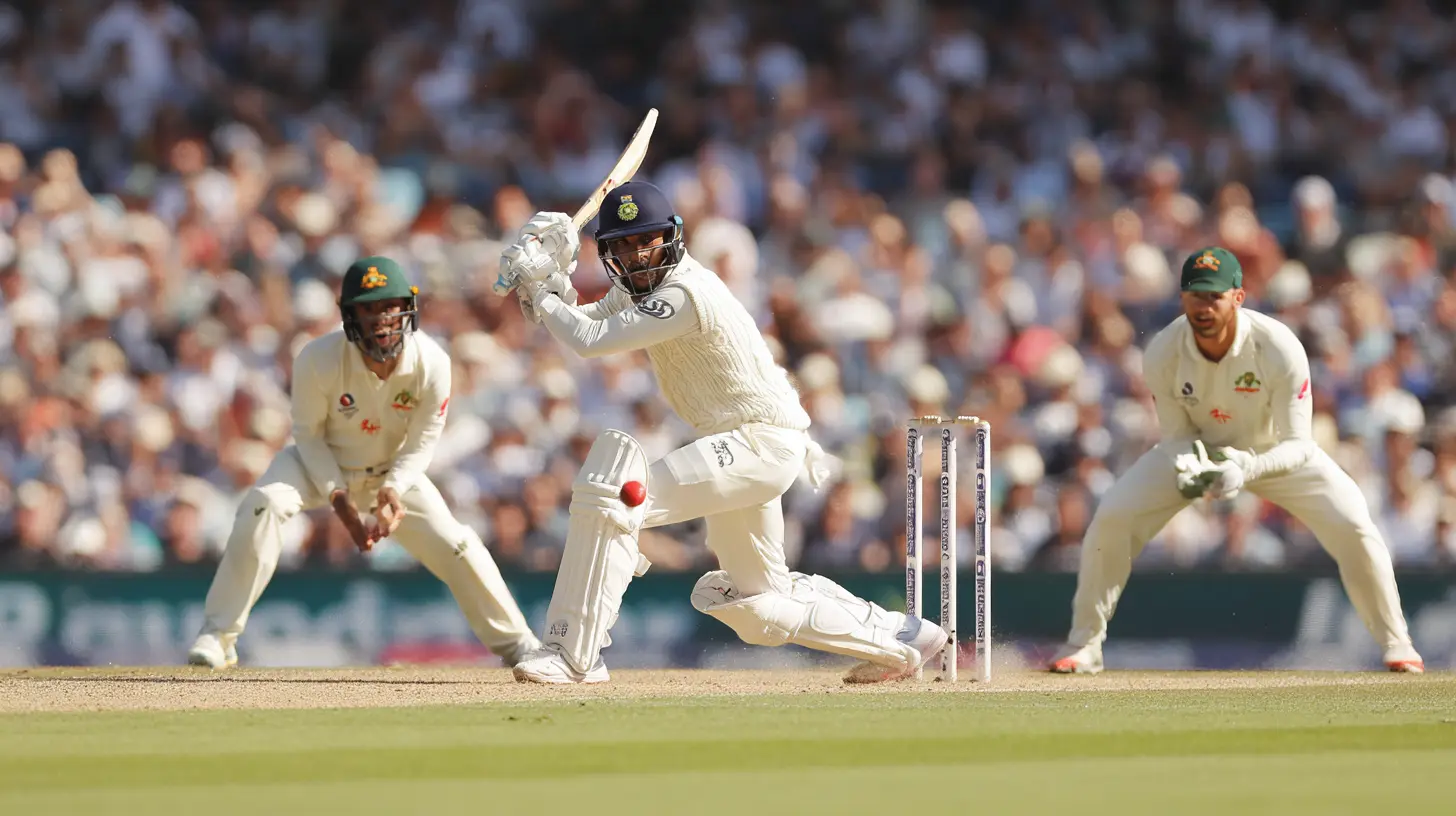
Why the 2027 Series Sits at a Crossroads
Ashes series tend to be remembered for one or two defining contests. In 2005 it was Andrew Flintoff against the Australian top order, and Shane Warne against England's middle order. In 2019 it was Steve Smith against a rotating cast of English seamers operating with a Dukes ball that moved constantly. The 2027 series will have its own signature, and the smart money says it will be built around pace against a new-look top order on both sides.There are structural reasons for this. Australia's batting core has aged together, which means the transition, when it comes, may arrive suddenly rather than gradually. England, meanwhile, has built a bowling attack around express pace and aggressive fields, a combination that works spectacularly when conditions cooperate and leaks runs when they do not.
Understanding the battles below requires holding two ideas at once. First, individual matchups matter more in Test cricket than in almost any other sport, because a batsman can face the same bowler 150 times across a series. Second, those matchups are shaped by conditions, ball choice, pitch preparation and scheduling. A duel that looks even on paper can become lopsided if the series is played on dry, abrasive surfaces or on green seaming tracks.

The Opening Exchange: New-Ball Bowlers Against New-Look Openers
Australia's Attack and England's First Two
Test matches are frequently decided in the first 20 overs. If Australia's new-ball pair can take two or three wickets before England's middle order settles, the entire shape of the match changes. If England's openers survive that passage, the game opens up.The critical question is who walks out first for England. By 2027, the incumbent openers may have changed. England has cycled through partners at a rate that suggests the position is not settled. The reason this matters is technical rather than sentimental. Opening in Australia demands a specific skill set: the ability to leave the ball on length, to play the short ball off the back foot without flinching, and to score off the rare loose delivery without chasing it.
The trade-off England faces is familiar. Select a specialist opener who averages 35 but knows where his off stump is, or select a talented middle-order player and convert him, accepting that he may average 40 but also play a rash shot in the third over of a Test. England has leaned toward the second option in recent years. That approach produces entertainment and inconsistency in roughly equal measure.
Watch for how the openers handle the ball angled across them. In Australia, the natural angle from a right-arm bowler over the wicket creates a corridor that is genuinely difficult to negotiate. Players who have grown up on English pitches, where the ball moves laterally off the seam, sometimes struggle with the Australian version, where the bounce is truer but the angle is more relentless.
The Left-Arm Angle
One specific sub-battle deserves attention: the left-arm seamer bowling to a right-handed opener from around the wicket. This angle creates a different set of problems than the conventional one. The ball holds its line or shapes away, and the batsman's natural scoring areas shift. Mitchell Starc built a career on this pattern, and any successor who can replicate it will cause England problems.The counter is to score square of the wicket and to use the depth of the crease. Batsmen who stand tall and punch through point can neutralize the angle. Batsmen who plant the front foot and drive are vulnerable. This is a technical detail, but it decides sessions.

The Middle Order: Where Series Are Won and Lost
Australia's Transition Problem
Australia's middle order has been the most stable in world cricket for the better part of a decade. That stability is both a strength and a risk. When a group of players ages together, they tend to decline together, and the replacement process becomes a scramble rather than a managed succession.By 2027, at least two of the established middle-order positions are likely to be filled by newer faces. The question is not whether they are talented. It is whether they can absorb the specific pressure of an Ashes series, which is unlike any other cricket they will have played.
Consider the difference between a debutant in a bilateral series against a mid-ranked side and a debutant at the Gabba or the MCG in an Ashes Test. The crowd, the media scrutiny and the quality of the bowling all intensify. Players who look composed in low-stakes cricket can look entirely different when every mistake is replayed for a week.
The practical implication for Australia is that blooding new batsmen in the Ashes is risky. The best practice, when possible, is to give them a series or two of exposure beforehand. Whether Australia has the scheduling luxury to do that is an open question.
England's Counter: Attack or Attrition?
England's middle order faces the opposite problem. It has plenty of players capable of scoring quickly, but fewer who can bat time when the ball is doing something. On a flat pitch, this is not an issue. On a seaming or bouncing surface, it becomes decisive.The strategic choice is between two valid approaches. The first is to attack. If the ball is moving, the theory goes, you may as well score while you can, because a good delivery will eventually get you. This approach has produced some remarkable England victories. It has also produced collapses that lasted less than an hour.
The second approach is to absorb. Leave the ball, tire the bowlers, wait for conditions to ease. This is the traditional method and it works, but it requires a level of patience that England's current batting group has not always shown.
Neither approach is universally correct. The right choice depends on the match situation, the pitch, and the specific bowler operating. A batsman facing a tired seamer on a flat deck should attack. A batsman facing a fresh quick on a green top should survive first and score later. The mistake is applying one philosophy rigidly regardless of context.

The Spin Question: Lyon, Leach and the Fourth Innings
Why the Second Spinner Matters
Ashes series in Australia are often decided by pace, but the role of the spinner is frequently underestimated. A finger spinner who can hold an end, bowl 25 overs in a day and take wickets on a fourth-innings surface is worth more than his raw average suggests.Nathan Lyon's importance to Australia has never been purely about wickets. It is about control. When he bowls, the game slows down, the quicks get a rest, and the batsmen face a different set of problems. Replacing that function is harder than replacing the wickets.
England's spin situation is more complex. The choice between a finger spinner and a wrist spinner depends on the surfaces expected. On Australian pitches that offer bounce but not much turn, a wrist spinner's variations can be more dangerous. On flatter surfaces, a finger spinner's accuracy and drift may be more useful.
The trade-off is between wicket-taking potential and economy. A wrist spinner might take four wickets in an innings but concede 120 runs. A finger spinner might take two and concede 70. In a high-scoring match, the wrist spinner's extra wickets are worth the runs. In a low-scoring match, the finger spinner's control is more valuable.
Watch how each captain uses his spinner in the first innings. If the spinner is brought on early and asked to attack, that signals a belief that the pitch will turn. If he is held back until the 40th over, that signals the opposite.
The Fourth-Innings Factor
The fourth innings of a Test in Australia is a distinct challenge. The pitch may have cracked, the bounce may have become uneven, and the pressure of a chase changes how batsmen play. Spinners who can exploit rough outside the right-hander's off stump become match-winners.The specific battle to watch is between the spinner and the batsman's defensive technique. Batsmen who play the ball late and use soft hands can survive on a turning pitch. Batsmen who push hard at the ball are vulnerable to catches at short leg and slip.
This is where a well-set field matters. A captain who sets an attacking field for the spinner, with catchers around the bat, creates pressure even if the ball is not turning sharply. A defensive field releases that pressure. The choice is a statement of intent.
The Pace Battle: Who Blinks First?
Express Pace and Its Costs
England has invested heavily in extreme pace. The logic is sound: on flat pitches, speed is the only reliable way to take wickets. But express pace carries costs. Fast bowlers break down. Their workloads must be managed. And when they are not fully fit, they can be expensive.The 2027 series will test whether England's pace strategy is sustainable across five Tests in roughly seven weeks. That is a punishing schedule. A bowler operating at 90 mph plus cannot play every match without risk of injury. Rotation is likely, which means the attack will change from Test to Test.
The trade-off is between continuity and freshness. A settled attack builds pressure and learns the batsmen's weaknesses. A rotated attack keeps bowlers fresh but loses some of that accumulated knowledge. Most teams compromise, rotating one or two bowlers while keeping the core intact.
Australia's approach has traditionally favored continuity, with quicks playing through pain and managing workloads between matches. Whether that approach remains viable as the schedule intensifies is an open question.
The Short Ball as a Tactical Weapon
The short ball is not just a delivery. It is a tactic that can change a batsman's mindset. A well-directed bouncer makes a batsman think about self-preservation, which can affect his footwork and his willingness to drive.The key is accuracy. A short ball that sits up is a gift. A short ball that follows the batsman and targets the ribs or the throat is a problem. The best exponents of this skill can land six balls in a row in the same uncomfortable area.
England has used the short ball aggressively, sometimes to the point of overuse. The risk is that a steady diet of bouncers becomes predictable and allows the batsman to set himself for it. The best practice is to use it as a surprise, mixed in with fuller deliveries that force the batsman forward.
Australia's batsmen will need to decide how to respond. Some players take on the short ball and score quickly. Others duck and sway, waiting for the bowler to tire. Both approaches can work, but they require commitment. A batsman who is caught between attacking and defending is the most vulnerable.
Captaincy and Tactical Decision-Making
The Coin Toss
The toss is often dismissed as luck, but the decision that follows it is not. Batting first on a green pitch can be a disaster. Bowling first on a flat pitch can mean chasing the game for four days. Captains must read the surface, the forecast, and the history of the ground.In Australia, the traditional wisdom is to bat first and put runs on the board. But that wisdom has been challenged in recent years as pitches have become more result-oriented. The correct decision depends on the specific conditions, not on tradition.
A captain who wins the toss and bowls first on a flat pitch is taking a risk. If the pitch does not deteriorate, his bowlers will tire and the opposition will score heavily. A captain who bats first on a green pitch is taking a different risk. The key is to assess honestly rather than defaulting to habit.
Field Placements and Pressure
Field placements are the most visible expression of a captain's thinking. A slip and a gully signal an attacking mindset. A deep point and a sweeper signal defense. The best captains change fields based on the bowler, the batsman and the match situation.The specific battle to watch is between the captain and the opposition's best batsman. If the captain can set a field that limits the batsman's favorite scoring areas, he forces him to play differently. That may lead to a mistake.
England's captains have been willing to set unusual fields, sometimes with only two or three fielders in catching positions and the rest on the boundary. This approach limits boundaries but concedes singles. Whether it works depends on the batsman's patience. A patient batsman will take the singles and wait for the bad ball. An impatient batsman will try to hit over the top and may get out.
Selection Dilemmas and Squad Depth
The All-Rounder Question
Every Ashes series raises the question of whether to play an all-rounder. The appeal is obvious: a player who can bat at seven and bowl 15 overs a day gives the team balance. The risk is that a player who does both may not be good enough at either to justify selection.The trade-off is between depth and specialization. A specialist batsman at seven strengthens the batting but weakens the bowling. A specialist bowler at eight strengthens the bowling but leaves the tail exposed. An all-rounder offers a compromise, but only if he is genuinely good enough to hold his place in one discipline.
The best all-rounders are not necessarily the most talented. They are the most reliable. A player who averages 35 with the bat and 35 with the ball is more valuable than a player who averages 45 with the bat and 45 with the ball, because the first player can be relied upon in both roles.
Backup Keeper and the Glovework Standard
The wicketkeeper is often overlooked until something goes wrong. A dropped catch can change a match. A missed stumping can change a series. The standard of glovework in an Ashes series is high, and any weakness is quickly exposed.The choice between a specialist keeper and a batsman who keeps is a recurring dilemma. A specialist keeper may average 25 with the bat but save 30 runs per match with the gloves. A batsman who keeps may average 40 but cost 20 runs with the gloves. The net difference is often smaller than it appears.
The deciding factor is usually the quality of the bowling attack. A strong attack creates more chances, which means the keeper's glovework matters more. A weak attack creates fewer chances, which means the keeper's batting matters more.
Conditions, Ball and Scheduling
The Kookaburra Factor
The Kookaburra ball behaves differently from the Dukes ball used in England. It swings less in the air but seams more off the pitch when new. It also deteriorates faster, which means reverse swing becomes a factor later in the innings.The practical implication is that bowlers who rely on swing may find the Kookaburra less helpful. Bowlers who rely on seam movement and pace may find it more helpful. This affects selection. A swing bowler who is effective in England may be less effective in Australia, and vice versa.
The ball also affects the batsmen. A ball that seams off the pitch demands a different technique than a ball that swings in the air. Batsmen who play late and watch the ball closely are better equipped to handle seam. Batsmen who commit early to a line are more vulnerable.
The Schedule and Its Consequences
Five Tests in seven weeks is a demanding schedule. Travel between cities adds to the fatigue. Back-to-back Tests, with only a few days between them, test the depth of the squad.The consequence is that rotation is almost inevitable. Fast bowlers cannot play every match. Batsmen may be rested if they are carrying a minor injury. The team that manages its squad best has an advantage.
The mistake is to treat the Ashes as a single event rather than a series of five separate matches. Each Test has its own conditions, its own momentum and its own demands. A team that peaks too early may fade. A team that starts slowly may run out of time.
What to Watch For
The 2027 Ashes will not be decided by a single moment. It will be decided by a series of small advantages: a dropped catch, a missed review, a tactical decision that works or fails. The battles outlined above are the ones most likely to shape those advantages.Watch the first 20 overs of each Test. Watch how the captains use their spinners. Watch how the batsmen handle the short ball. Watch the field placements when the game is tight. These are the moments where series are won and lost.
The most useful thing a viewer can do is to follow the matchups rather than the scoreboard. A batsman who is struggling against a particular bowler is a story even if he is scoring runs. A bowler who is tiring is a story even if he is taking wickets. The scoreboard tells you what happened. The matchups tell you what is likely to happen next.
all images in this post were generated using AI tools
Category:
CricketAuthor:

Ruben McCloud