Rugby World Cup 2027: Early Contenders and Dark Horses
23 October 2026
The 2027 Rugby World Cup in Australia is still far enough away that the picture remains genuinely unsettled, and that is exactly what makes early analysis worthwhile. The tournament expands to 24 teams, the pool structure changes, and the qualification pathway is still producing entrants. Anyone who claims to know the final four today is guessing. But the gap between informed projection and guesswork is real, and it comes down to understanding how World Cup teams are actually built: through squad depth, through the four-year cycle of test match exposure, through coaching continuity, and through the simple physics of a seven-week tournament that punishes teams without a reliable second game plan.
This piece separates the sides that have the structural foundations to win in Australia from the ones that could plausibly crash the semifinals. It also explains the reasoning behind each call, because the reasoning matters more than the ranking. Form two years out is a weak signal. Systems, depth charts, and coaching stability are stronger ones.
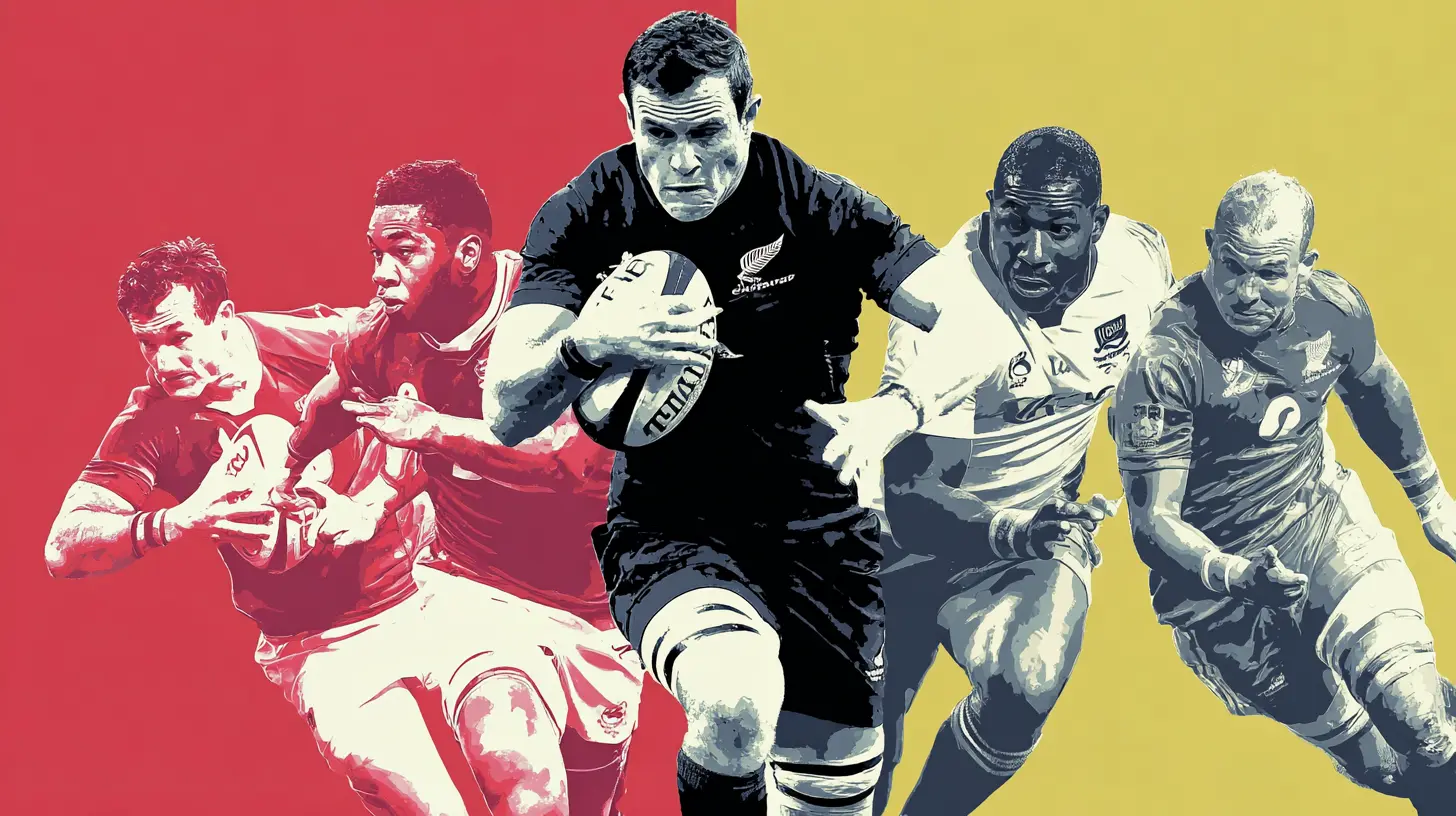
Why 2027 Is a Different Tournament
Before assessing anyone, it helps to be clear about what has changed. The expanded 24-team format means more matches against lower-ranked opposition in the pool stage, which has two consequences. First, top sides can rotate more and arrive at the knockout rounds fresher. Second, goal difference and bonus points matter less, so the pool stage becomes more about managing minutes than running up scores. That slightly favors teams with deep squads and hurts teams whose first XV is excellent but whose bench is a cliff edge.The tournament window in Australia also matters. Late-year scheduling in the southern hemisphere means conditions will range from dry and fast in some venues to wet and windy in others. Teams that can only play one way will be exposed. The 2023 tournament in France rewarded teams comfortable in the rain and the grind. Australia will likely reward a broader skill set, but not uniformly, and smart coaches will target venues and conditions the way they target matchups.
Finally, the qualification and preparation calendar compresses for everyone. Pacific nations get fewer meaningful tests than the Six Nations or Rugby Championship sides. That asymmetry is a permanent feature of the sport, and it shapes which dark horses are realistic and which are romantic.

The Contenders: Teams With the Full Toolkit
South Africa: The Benchmark Until Proven Otherwise
South Africa enters every cycle as the team to beat until someone actually beats them when it matters. The back-to-back titles in 2019 and 2023 were not lucky runs. They were the product of a deliberate model: overwhelming forward power, a bench designed to escalate physicality rather than merely rest starters, and a kicking game that controls territory and forces opponents into error-prone corners.What makes the Springboks scary for 2027 is that the model is now institutional rather than dependent on a single generation. The domestic system produces forwards who are physically ready for test rugby at a young age, and the coaching structure has shown it can integrate new caps without dropping the standard. The trade-off is real, though. That model depends on winning the collision and the set piece. If a referee interprets the breakdown strictly, or if an opponent finds a way to play at pace and deny the Boks set-piece platform, the plan gets uncomfortable. France showed in 2023 that you can push South Africa close by refusing to play their game.
The question readers should ask is not whether South Africa will be good. They will. The question is whether the next wave of forwards and halfbacks is genuinely world class or merely very good. History says the pipeline holds. It is still the single biggest variable in their title defense.
France: The Most Talented Squad With the Most Fragile Psychology
France has the deepest talent pool in the world by most reasonable measures. The Top 14 produces an enormous number of test-ready players, and the national team has spent years building a style that blends forward dominance with genuinely creative back play. Antoine Dupont remains the best player in the world, and the supporting cast around him is young enough to peak in 2027 rather than decline.The caveat is not talent. It is the mental side of knockout rugby. France's 2023 exit at home, against a South Africa side that simply refused to lose, was a reminder that the margin between brilliant and brittle is thin. Home pressure is gone in 2027, which may actually help. But the pattern of France producing one extraordinary performance and one flat one in the same tournament is a coaching problem as much as a player problem, and it has not fully been solved.
France is a genuine contender. The reason to hedge is not ability. It is whether the team can win three consecutive high-pressure matches without a lull. That is the specific skill that separates champions from nearly-men, and France has not yet consistently shown it.
Ireland: The System That Keeps Working
Ireland's rise has been one of the most impressive structural stories in modern rugby. The provinces function as a genuine development pipeline, the national team plays an identifiable style built on accurate passing, relentless rucking, and intelligent kicking, and the coaching has been stable enough to drill that style into a large squad.The concern is age and regeneration. Several key players from the 2023 era will be past their peak by 2027, and Ireland's challenge is replacing them without losing the system. The encouraging sign is that the provinces keep producing players who slot in without the team looking disjointed. The discouraging sign is that Ireland has historically struggled to convert dominant periods into World Cup semifinal wins. That is a psychological and tactical barrier, not a talent barrier.
Ireland belongs in the contenders group because the system is proven and the pipeline is real. Whether they can finally break the quarterfinal ceiling is the question every Irish fan is tired of hearing and every analyst is right to ask.
New Zealand: Rebuilding, But Never Far Away
New Zealand's 2023 campaign was a reminder that the All Blacks can look mortal and still reach a final. The post-2015 transition was rougher than the public expected, and the team has cycled through coaching changes and selection debates that would have been unthinkable a decade ago.The reason to keep New Zealand in the contenders tier is simple: the talent production system is still the best in the world at turning athletic teenagers into complete rugby players. The reason to hesitate is that the international game has caught up tactically. New Zealand can no longer rely on superior fitness and skill to overwhelm organized defenses. They need a clear plan against the best sides, and recent years have shown that plan is not always there.
New Zealand is a contender, but a less certain one than the jersey suggests. That is an unusual sentence to write, and it is accurate.
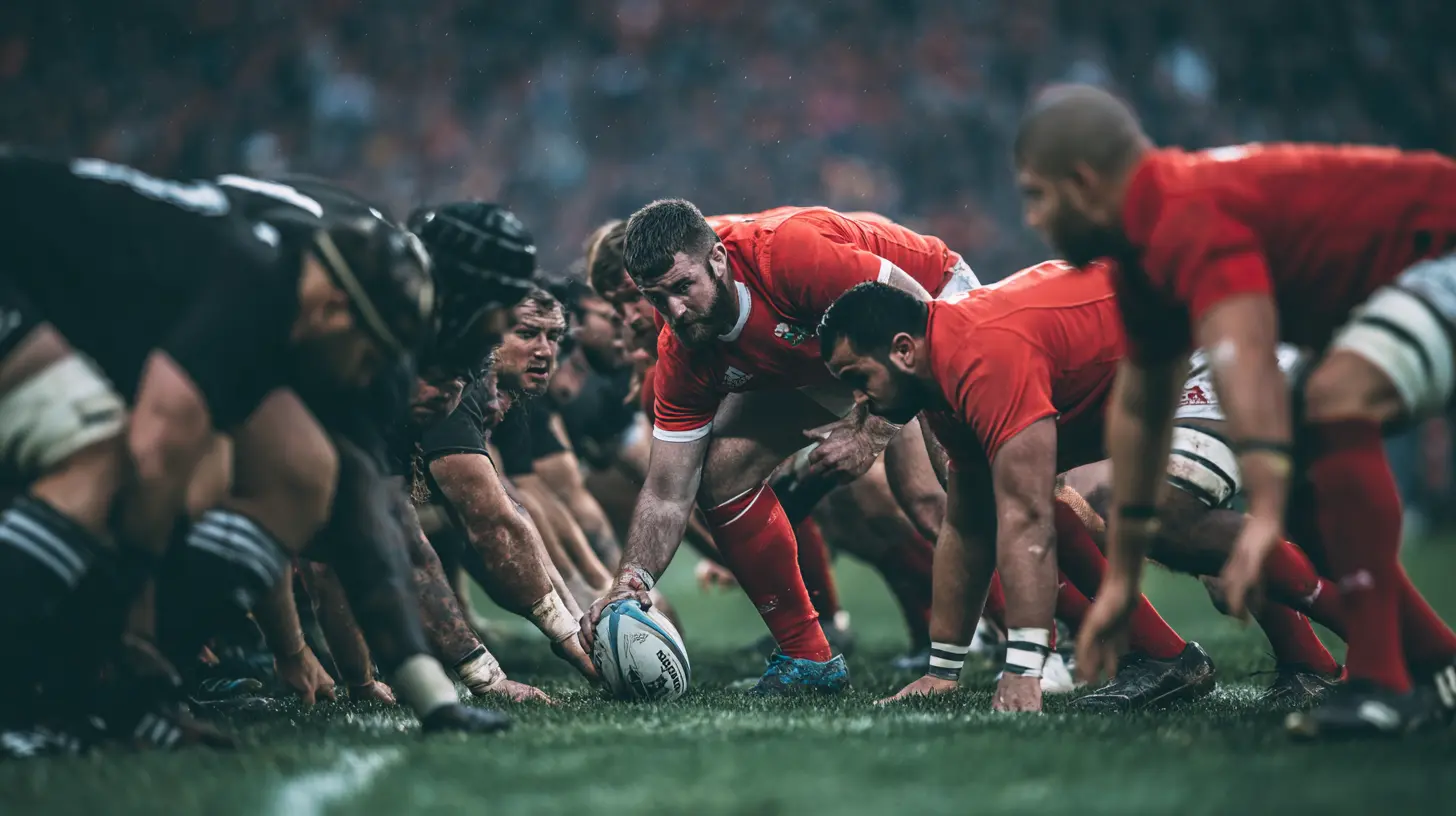
The Dark Horses: Teams That Could Break the Knockout Ceiling
Dark horses are not teams that might win. They are teams whose ceiling is a semifinal or final, whose path could open up, and whose style creates specific problems for the favorites. The distinction matters, because calling a team a dark horse when it has no realistic path is just optimism.Australia: Hosts With a Real Chance
Host nations get a structural boost that is easy to underestimate. Familiar venues, home crowds, referee familiarity, and the ability to plan a multi-year preparation around a fixed schedule all matter. Australia also has a genuine rugby public that will turn up if the team is competitive.The honest assessment is that Australia's recent form has been inconsistent and the team has cycled through coaches and selection philosophies. But the talent base is better than results suggest, and home tournaments have a way of sharpening focus. The 2003 Wallabies reached a final nobody predicted. The 2027 side does not need to be world-beating to reach a semifinal. It needs to be organized, fit, and tactically clear.
The trade-off for Australia is pressure. Hosts carry expectation, and a poor pool performance can turn the crowd against the team quickly. That is a real risk and it should temper any prediction of a deep run.
Fiji: The Most Dangerous Team Outside the Top Tier
Fiji has moved from entertaining to genuinely threatening. The improvement in set piece, tactical kicking, and defensive organization has been substantial, and the team now has players who compete at the highest level of professional rugby week in and week out. The 2023 win over Australia was not a fluke. It was the product of a plan.The reason Fiji is a dark horse rather than a contender is depth. Fiji can beat anyone on a given day. Winning three knockout matches in a row requires a squad of 30-plus players who can all execute the system, and that is where the Pacific nations still lag. Qualification pathways and player release rules make it hard to build that depth. If Fiji gets a favorable draw and stays healthy, a semifinal is genuinely possible. If injuries hit the wrong positions, the drop-off is steep.
Argentina: The Team Nobody Wants in Their Pool
Argentina has quietly built one of the more complete programs outside the traditional powers. The Jaguares experiment, even in its disrupted form, gave Argentine players a professional environment, and the national team has developed a forward pack that can compete physically with anyone. The 2023 semifinal run was not a fluke. It was the payoff of a decade of investment.The limitation is consistency. Argentina can beat New Zealand one week and lose to a mid-tier side the next. That pattern suggests the system is good but the squad depth and mental preparation are not yet at championship level. For 2027, Argentina is a team that could top a pool and reach a semifinal. It is also a team that could exit in the quarterfinals. Both outcomes are plausible, which is the definition of a dark horse.
Scotland: The Permanent Nearly-Men
Scotland deserves mention because the team has been consistently competitive against top opposition without ever converting that into a deep run. The style is attractive and the coaching has been stable. The problem is physical: Scotland's pack has struggled against the biggest forward units, and knockout rugby tends to magnify that weakness.For Scotland to break through, the draw needs to be kind and the team needs to avoid the top-tier forward packs until late in the tournament. That is not a criticism. It is a realistic assessment of where the squad stands. A quarterfinal is the likely ceiling. A semifinal would require a lot to go right.

How to Evaluate Dark Horses Without Getting Fooled
The most common mistake in early World Cup analysis is confusing a good result with a good process. A team that beats a top side in a one-off test may have caught them on a bad day. A team that consistently competes against top sides over two years has a process.When assessing a dark horse, look for four things.
First, set-piece stability. Teams that cannot scrum and lineout at test level will be targeted relentlessly in knockout rugby. This is non-negotiable.
Second, a reliable goal kicker and a clear kicking strategy. Tournament rugby is decided by fine margins, and teams that cannot control territory and take points will lose close matches.
Third, squad depth in the key positions: front row, halfback, and flyhalf. A team with one excellent flyhalf and no backup is one injury from elimination.
Fourth, coaching continuity. Teams that change coaches within 18 months of a World Cup rarely outperform expectations. The preparation cycle matters, and it cannot be compressed.
Apply these four filters and the dark horse list shrinks quickly. That is the point. Most dark horse picks are emotional. The ones that hold up are structural.
Common Misconceptions About World Cup Contention
A few myths deserve direct correction.The first is that form two years out predicts the tournament. It does not. Teams peak on a four-year cycle, and many sides deliberately hold back in the middle years to manage player workload. A team that looks mediocre in 2025 may be exactly where it wants to be.
The second is that the best player in the world makes a team a contender. It helps, but rugby is the least individual-dependent of the major team sports. Dupont is extraordinary, and France still lost in 2023. Depth and system beat star power over seven weeks.
The third is that home advantage guarantees a deep run. It helps, but it also raises pressure and shortens the leash for coaches. Hosts have failed before, and they will fail again.
The fourth is that the expanded format makes it easier for dark horses. In some ways it does, because more teams get knockout exposure. In other ways it favors the deep squads, because the pool stage is less about survival and more about peaking at the right time.
What to Watch Between Now and 2027
The signals that matter most are not rankings. They are selection patterns and coaching decisions.Watch which teams are capping young players in meaningful test matches rather than garbage time. That tells you who is building depth for 2027.
Watch which teams are experimenting with game plans rather than defaulting to their comfort zone. Teams that only have one way to play will be found out.
Watch the Pacific nations' access to test matches. If Fiji, Samoa, and Tonga get a meaningful schedule, the dark horse pool widens. If they do not, the gap stays wide.
Watch the coaching carousel. A team that changes head coach in 2026 is unlikely to be a contender. A team that extends its coach through 2027 is signaling stability, and stability is undervalued in early predictions.
A Final Word on Humility
The most useful thing anyone can say about 2027 is that the picture will look different in twelve months. Injuries, retirements, coaching changes, and the qualification pathway will reshape the field. The contenders identified here are contenders because their structures are sound, not because their current form is spectacular. The dark horses are dark horses because they have a specific path, not because they are fashionable picks.That is the right way to read early analysis. Treat it as a framework for watching, not a prediction to defend. The teams that win World Cups are usually the ones that spent the intervening years solving problems nobody was talking about.
all images in this post were generated using AI tools
Category:
RugbyAuthor:

Ruben McCloud