The Evolution of Rugby Tactics: What's Next After the 2027 World Cup?
8 September 2026
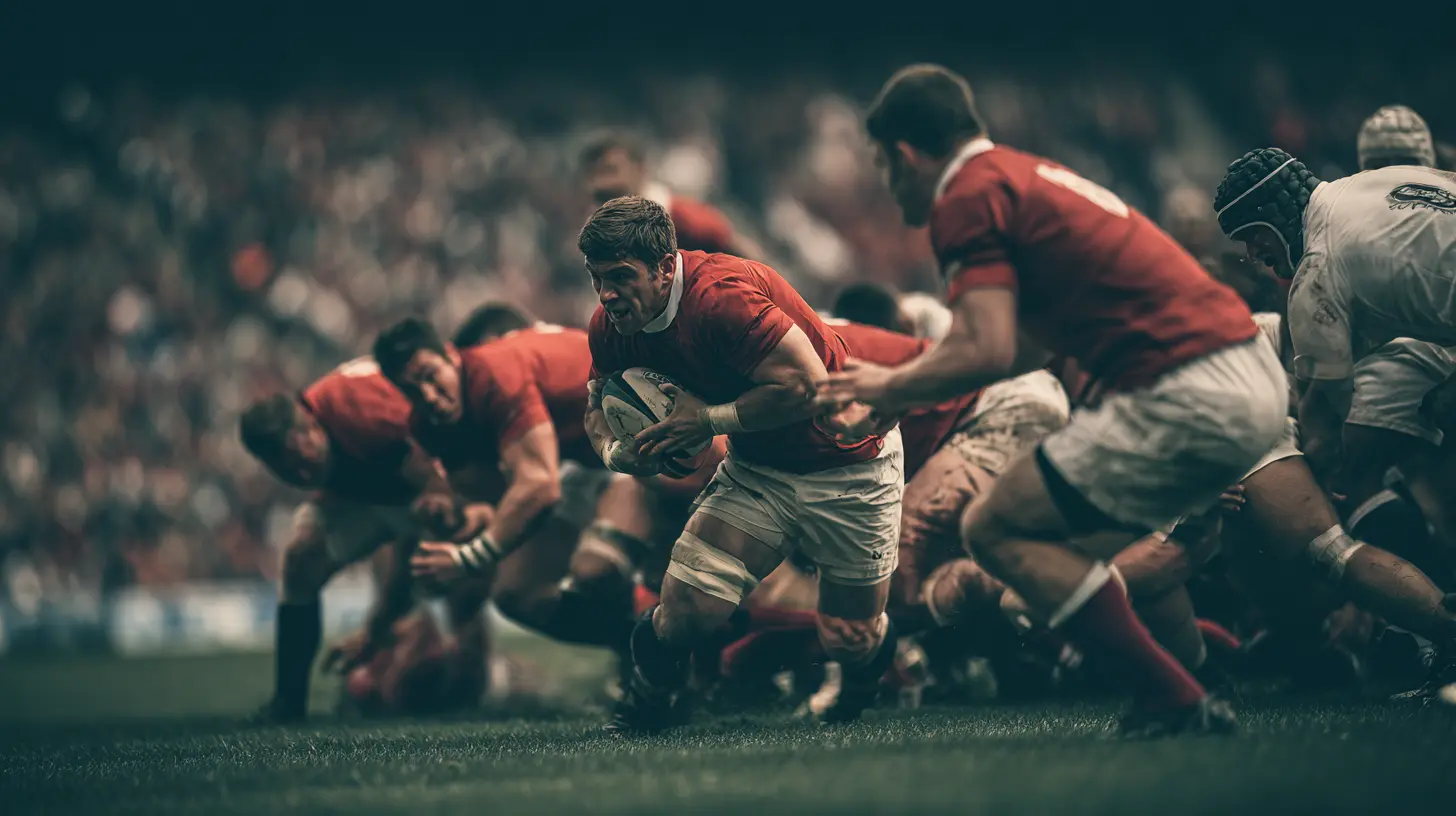
Let's be honest. If you have watched rugby for more than a decade, you have probably experienced a specific kind of existential whiplash. One minute, we were celebrating the brutish elegance of a rolling maul. The next, we are watching a 120-kilogram tighthead prop throw a no-look, off-the-ground, one-handed pass that would make an NBA point guard blush. The game has not just evolved; it has been put through a particle accelerator, and the fragments are still spinning.
As we look past the 2027 World Cup in Australia, the question is not whether the game will change. It always does. The real question is whether the coaches, players, and referees can keep up without the sport losing its soul to the spreadsheets. We are heading into an era where the physical collision is becoming a secondary weapon, and the primary weapon is space itself. And the teams that win will be the ones who understand that chaos is a strategy, not an accident.
The Death of the Static Pod (And Why It Took So Long)
For years, the default attacking structure was the "pod system." Three forwards would stand in a tight cluster, take a pass, and smash into a defender. It was safe. It was predictable. And for a while, it was effective, primarily because defenses were equally static. You lined up, you hit the gain line, and you fought for the right to recycle slow ball.
But here is the dirty secret that analysts have known for a decade: the pod system was never a way to score tries. It was a way to avoid losing. It was a safety blanket for flyhalves who were terrified of a rushed defensive line. The problem is that modern defensive systems, specifically the "blitz" and the "rush," have made the static pod obsolete.
If you stand still in front of a rushing defensive line in 2027, you are not just going to get tackled. You are going to get turned over, or worse, you are going to get isolated and penalized for holding on. The evolution we are seeing now is the "pre-structured chaos." Instead of three forwards standing together, we are seeing forwards running lines that look like they are designed to get in the way, but are actually designed to pull defenders out of the backfield.
The best teams are now using their forwards as decoys who run through the space that the backs are about to attack. It is a misdirection play that happens at a thousand miles an hour. The tighthead prop is not there to carry the ball; he is there to occupy the blindside flanker so the inside center can hit a hole that did not exist two seconds prior. This is why you are seeing more "pop" passes off the ground and fewer direct carries. The forward's job is no longer to gain meters; it is to create a micro-second of hesitation in the defense. If you are still coaching your forwards to just "take the contact and go to ground," you are coaching a losing team.
The "No-Ruck" Offense: The Next Frontier
We have already seen glimpses of this. The All Blacks and France have experimented with quick taps and quick throws that bypass the ruck entirely. But the next evolution is the deliberate avoidance of the ruck as a primary attacking structure.
Think about it. A ruck is a pause. It allows the defense to reset their line and count their numbers. The most dangerous attacking teams in the post-2027 era will be the ones who realize that the breakdown is a failure state, not a goal. The goal is to keep the ball alive.
This creates a fascinating tactical paradox. If you never ruck, you never win a penalty for the defense being offside at the ruck. But you also force the defense to make a choice: do they commit to the tackle, or do they stay on their feet to guard against the offload?
The "no-ruck" offense requires a specific skillset that is still rare. It requires a pass that is flat but not forward, and a support runner who is running at full speed behind the ball carrier, not next to him. It is the "second-man" play, but executed by the entire team. The trade-off is brutal. If you attempt an offload and it goes to ground, there is no ruck to protect the ball. It is a live ball, and the defending team's scrumhalf is already there to pounce. We saw this in the 2023 World Cup, where teams like Argentina thrived on forcing errors from teams that tried to play too much rugby in their own half.
So, what is the best practice? It is situational awareness. The no-ruck offense is a weapon for the opposition's 22-meter line, not for your own try line. Trying to play without a ruck in your own half is not "expansive rugby"; it is an act of self-harm. The best teams will be the ones who can switch between "rucking" and "non-rucking" seamlessly, depending on field position and the fatigue of the defensive line.
The Second Playmaker: From Luxury to Necessity
We used to talk about having a "second playmaker" at fullback as a clever tactical wrinkle. Now, it is a biological requirement. The game is moving so fast that one flyhalf cannot see everything. The defensive line speed is so intense that the flyhalf is often forced to take the ball flat to the line, which reduces their time to make a decision to under a second.
Enter the fullback. But we are not talking about the traditional fullback who sits deep and catches high balls. We are talking about the "roving" fullback who stands in the front line, often at first receiver. This is the evolution of the "dual playmaker" system that the Crusaders used to win Super Rugby titles, but it has been supercharged.
The key here is the "screen" pass. The flyhalf runs a hard line towards the inside shoulder of the defender, forcing the rush defense to commit to him. At the last millisecond, he pops the ball to the fullback, who is now running at the outside shoulder. This creates a two-on-one against the last defender.
The misconception is that this requires a fullback with a massive boot. It does not. It requires a fullback with the passing accuracy of a scrumhalf and the running lines of a center. Damien McKenzie and Willie Le Roux were the prototypes. The next generation, however, will be built for this. They will be smaller, quicker, and more elusive, because their primary job is not to clear the ball to touch, but to break the line with a pass.
The downside? You are vulnerable to the cross-field kick. If your fullback is standing flat, the space behind him is vast. This is why we are seeing a return of the "bomb" and the contestable kick, not as a way to gain territory, but as a way to punish teams who commit their fullback to the attack. The tactical arms race is a pendulum. When everyone plays with a second playmaker, the defense will put a dedicated "sweeper" in the backfield to cover the space. Then, the attacking team will counter by kicking the ball over the sweeper's head into the corner. It is chess, but with concussions.
The Breakdown: The Law of Unintended Consequences
Let's talk about the breakdown, because it is the single most confusing, frustrating, and crucial area of the game. The current laws favor the attacking team, but the interpretation of those laws is a mess. The 2027 World Cup will likely see a further crackdown on the "croc roll" and the "seal," but the real evolution is happening in the clear-out technique.
We are moving away from the "dominant, explosive clear-out" that aims to physically remove the jackal. That technique is too risky. If you get it wrong, you hit the neck, you get a red card, and you lose the game. The new technique is the "legal seal."
This is where the forward comes over the ball, but does not engage the defender. Instead, they create a physical barrier with their own body, using their hips and legs to block the path of the arriving defenders. They are not trying to win the penalty. They are trying to buy the scrumhalf an extra half-second.
This sounds simple, but it requires incredible body control. The difference between a legal seal and an illegal "side entry" is the difference between a penalty and a turnover. Coaches are spending more time on this than on tackling technique. The best players in this area are not the strongest; they are the most flexible and the most balanced. They are the ones who can bend their knees, keep their spine parallel to the ground, and absorb contact without moving.
The "why" behind this is simple: the jackal is the most potent defensive weapon. If you can nullify the jackal, you nullify the defense's ability to slow down your ball. If you can slow down the ball, you cannot attack. So, the entire attacking game plan hinges on the ability to seal the ball legally. If you are a young forward reading this, stop spending all your time in the gym. Spend more time on the yoga mat and in the breakdown drill. Your career depends on it.
Defensive Evolution: The "Blitz and Slide" Hybrid
For years, defenses chose a philosophy. Either you blitz (rush up and put pressure on the flyhalf) or you slide (drift across and cover the outside). The blitz is high-risk, high-reward. The slide is conservative.
The next evolution is the "patternless" defense. This is a defense that changes its look based on the attacking team's formation, not on a pre-determined call. We are seeing the rise of the "positionless" defender. The blindside flanker might be playing in the outside center channel. The openside flanker might be dropping into the backfield to cover the cross-kick.
The key to this defense is communication and trust. It looks chaotic to the naked eye, but it is a highly structured chaos. The idea is to present a different picture to the attack every single play. If you line up in the same formation every time, the attacking team's video analysts will find the weakness. If you line up in a different shape every time, you force the attack to make decisions in real-time, without the comfort of a pre-planned pattern.
The trade-off here is that this defense is exhausting. It requires every player to be a multi-dimensional athlete. You cannot hide a slow, lumbering lock in the tight channels anymore. He has to be able to cover the backfield if the play breaks down. This is why we are seeing the emergence of the "hybrid" lock, a player who is 2 meters tall, runs like a center, and tackles like a flanker. They are rare, and they are expensive, but they are worth their weight in gold.
The Impact of the "Shot Clock" and the Need for Speed
We cannot ignore the officiating. The shot clock for conversions and penalties is not going away. It is speeding up the game, but it is also changing the tactics of the "water break." We are seeing teams use the water break not just to hydrate, but to communicate a new defensive structure or a new attacking play.
The real change, however, is the emphasis on "ball in play" time. The governing bodies want more of it. This means that the "kick to the corner and maul" strategy is becoming less viable, not because it is ineffective, but because it takes too long. The lineout takes 30 seconds to set up. The maul takes another 20 seconds to form and drive. That is nearly a minute of dead time for a 5% chance of scoring.
Instead, we are seeing the rise of the "quick lineout" and the "tap and go." The teams that will dominate the post-2027 landscape are the ones who can increase the tempo of the game to a point where the defense cannot get set. This is not about fitness; it is about mental processing speed. The players have to be able to recognize the opportunity to go quickly and execute the skill under fatigue.
The common mistake is to think that "speed" means "playing with the ball in hand all the time." That is not true. Speed means transition. It means that the moment the ball is turned over, the attacking team is already in position to strike. It is the speed of the first pass after a turnover that matters, not the speed of the players in the open field.
Specialization vs. Versatility: The Final Reckoning
We have reached a fork in the road. One path leads to hyper-specialization. We will have "lineout specialists," "defensive specialists," and "jackal specialists" who only play for 20 minutes a game. The other path leads to total versatility, where every player on the field can play every position.
The reality is that the 2027 World Cup will be won by the team that best blends the two. You still need a specialist hooker who can hit the lineout throw under pressure. But you also need a hooker who can pass like a flyhalf if you want to play the no-ruck offense.
The pressure on the front row is immense. In the past, props were judged on their scrummaging and their carrying. Now, they are being judged on their ability to make a tackle in the open field and their ability to pass the ball. This is why we are seeing a generation of props who are smaller and leaner than their predecessors. They sacrifice some raw power in the scrum for mobility around the park. It is a trade-off, and it is a dangerous one. If you are too light, you will be destroyed at the set piece. If you are too heavy, you will be exposed in the wide channels. Finding the balance is the holy grail of modern coaching.
The Practical Advice for the Next Decade
So, what does this mean for the average club coach or the passionate fan? First, stop romanticizing the past. The days of the "10-man rugby" are over. If you are coaching a team in 2028, you need to teach your forwards how to pass and how to run supporting lines. You cannot hide your big men on the wing anymore.
Second, embrace the concept of "phases of attack." Do not try to score from every possession. Instead, focus on "field position" and "exit strategies." The best teams are the ones who know when to attack and when to kick for territory. The post-2027 game will be won by the team that makes the fewest mistakes in their own half, not the team that scores the most spectacular tries.
Third, understand that the breakdown is a contest of leverage, not strength. Teach your players to get their body height low and to use their legs to drive, not their shoulders. The referee is watching the neck. Do not give them a reason to blow the whistle.
The Misconception of "Total Rugby"
There is a myth that "total rugby" means playing with reckless abandon. It does not. It means that every player on the field has the skill set to make the right decision in any situation. It is a system of risk management. The best teams take the highest percentage option, not the most exciting one.
The future of rugby is not about going backwards to the amateur era of unstructured play. It is about going forwards to a state of hyper-efficiency. It is about data analytics telling you that the "pod" system has a 30% success rate against a blitz defense, while the "screen" pass has a 60% success rate. The teams that listen to the data and have the skills to execute the data will win.
The 2027 World Cup is not the end of the evolution. It is just the beginning of the next phase. The game will be faster, more complex, and more confusing to the casual viewer. But for those of us who love the nuance, it will be a thing of beauty. Just do not blink, because you will miss the next tactical revolution.
all images in this post were generated using AI tools
Category:
RugbyAuthor:

Ruben McCloud
Discussion
rate this article
2 comments
Zevros Barlow
What innovative strategies will emerge post-2027 World Cup? Exciting times!
October 18, 2026 at 10:21 AM
Elise McGinnis
This article offers great insights into the future of rugby tactics. With the 2027 World Cup on the horizon, I'm excited to see how teams adapt and innovate. Looking forward to the evolution ahead!
September 8, 2026 at 8:16 AM