The Science of Crowd Dynamics in Modern Sports
31 October 2026
A sold-out stadium is never just a backdrop. It is an active participant. The roar that rises when a home team scores, the nervous hush before a penalty, the wave of boos that greets a controversial call, the way 60,000 people can collectively hold their breath, all of it shapes what happens on the field, court, or track. Crowd dynamics is the study of how people behave in large groups, and in sports it has become a genuine performance variable that coaches, athletes, venue operators, and broadcasters now treat with scientific seriousness.
This article breaks down how crowds form, why they behave the way they do, what that behavior does to athletes and officials, and how organizations can manage it. The goal is not to repeat the familiar "home advantage is real" talking point. It is to explain the mechanisms behind it, the conditions under which crowds help or hurt, and the practical decisions that follow from understanding those mechanisms.
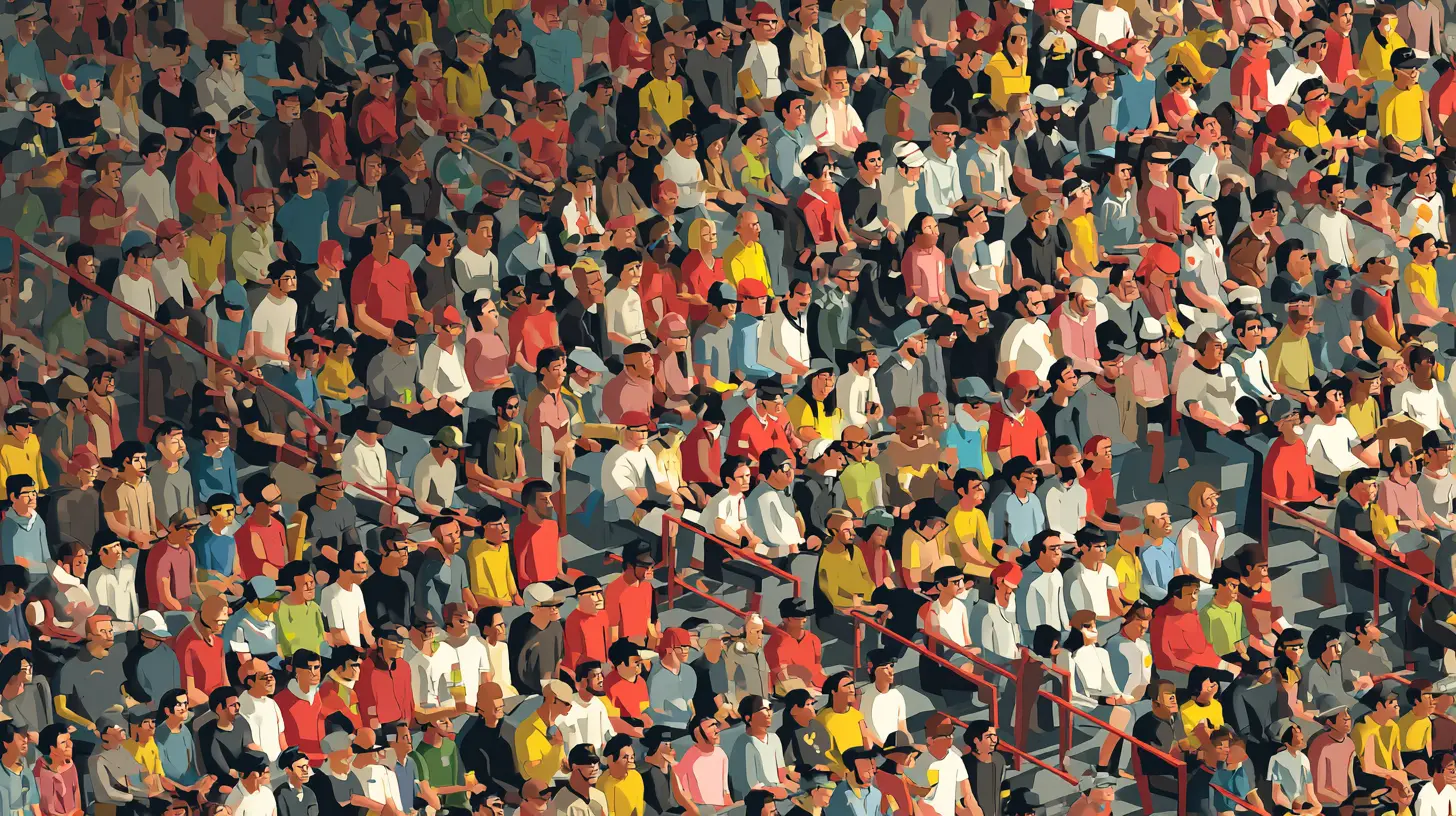
What Crowd Dynamics Actually Means in a Sports Context
Crowd dynamics sits at the intersection of social psychology, behavioral economics, acoustics, and safety engineering. In a sports setting, it covers several distinct phenomena that are often lumped together:- Collective emotion and arousal. How excitement, anxiety, anger, and joy spread through a crowd and amplify.
- Social identity and tribalism. How shared team allegiance reshapes individual behavior and judgment.
- Crowd noise and its acoustic properties. How sound is generated, how it propagates through a venue, and how it affects communication.
- Movement and flow. How people enter, exit, circulate, and behave in concourses, stands, and emergency situations.
- Crowd influence on officials. How referee decisions shift under social pressure.
These are related but separate systems. A venue can have excellent crowd safety and a hostile atmosphere at the same time. A team can enjoy a loud crowd that nonetheless fails to influence the scoreboard. Treating "the crowd" as one thing leads to sloppy conclusions, so it helps to separate the components.
The difference between atmosphere and influence
Atmosphere is the felt experience of being in a crowd: noise, color, tension, shared emotion. Influence is the measurable effect the crowd has on outcomes. The two overlap but are not identical. A stadium can feel electric and have almost no effect on the game, and a quieter, more knowledgeable crowd can tilt marginal decisions. Broadcasters and marketers tend to optimize for atmosphere. Coaches and analysts should care more about influence, because that is where competitive advantage lives.
Why Crowds Amplify: The Psychology Behind the Noise
Deindividuation and the loss of self-monitoring
When people join a large group, they become less self-conscious and less restrained. Psychologists call this deindividuation. In a stadium, the conditions are ideal for it: anonymity in a sea of similar faces, physical distance from the field, and a shared emotional script. The result is that people shout things they would never say in a meeting, react faster and louder, and feel less personally responsible for their behavior.This cuts both ways. It produces the electric energy that makes live sport special, and it also produces abuse, throwing objects, and pitch invasions. Any crowd management strategy that ignores deindividuation will fail, because it treats individuals as rational actors when the environment has temporarily switched off the parts of the brain that usually keep them in check.
Emotional contagion and the speed of collective mood
Emotions spread through crowds faster than information. A single spectacular play can turn a nervous stadium into a celebration in under a second, and a single bad call can flip it the other way. This is emotional contagion: people automatically mimic and synchronize with the expressions and postures of those around them.The practical implication is that crowd mood is volatile and path-dependent. A team that scores early often benefits from a sustained emotional tailwind; a team that concedes early can face a crowd that turns anxious and then hostile. Coaches who talk about "managing the crowd" are really talking about managing the emotional trajectory of tens of thousands of people, which is only partially possible.
Social identity theory and the tribal switch
Sports fandom is one of the cleanest examples of social identity theory in action. When a person identifies with a team, their sense of self expands to include the group. Wins and losses become personal. Criticism of the team feels like criticism of the self. This is why fans defend players they have never met and why a bad season can genuinely affect mood and wellbeing.The tribal switch explains several otherwise puzzling behaviors. It explains why fans of opposing teams can be civil before kickoff and hostile during the match. It explains why referees are perceived as biased even when they are not. It also explains why crowd hostility is often aimed at officials rather than players: the official is an outsider who threatens the group's identity.

The Acoustics of a Stadium: Why Noise Matters and When It Does Not
Noise is the most studied form of crowd influence, and it is also the most misunderstood. A loud stadium is not automatically an intimidating one, and decibel readings alone tell you very little about how the sound affects play.How crowd noise is generated and shaped
Crowd noise is a byproduct of many individual voices plus structural effects. Three factors determine how loud a venue actually gets:1. Crowd size and density. More people produce more sound, but the relationship is not linear. Density matters more than raw capacity because tightly packed sections produce more coordinated noise.
2. Venue geometry. Roofs, overhangs, and enclosed bowls trap sound and reflect it back onto the field. Open stadiums leak noise into the sky. This is why a 40,000-seat enclosed arena can be louder at field level than a 70,000-seat open stadium.
3. Crowd coordination. Synchronized chanting, clapping, and stomping produce far more usable noise than scattered shouting. A coordinated crowd of 20,000 can outperform a disorganized crowd of 50,000.
What noise actually disrupts
The common claim is that crowd noise disrupts communication. That is true, but the details matter. Noise affects different sports differently:- In football (soccer), noise mainly disrupts verbal communication between players, which matters most for defensive organization and set pieces. It also affects the referee's ability to hear whistles and assistants' calls, though officials use vibration and visual signals to compensate.
- In American football, noise disrupts the quarterback's cadence and the offensive line's snap count. This is why teams practice silent counts and why false starts spike in loud road games. The effect is real and measurable in penalty data.
- In basketball and indoor sports, noise is less about communication and more about arousal and momentum. The acoustic environment is more controlled, so the crowd's role shifts toward emotional influence.
- In tennis and golf, noise is governed by strict etiquette, and the crowd's influence runs through timing and concentration rather than volume.
The takeaway: noise is a tool whose effectiveness depends on what the sport requires players to hear and coordinate. A crowd that is loud during the wrong moments can hurt the home team, which is why knowledgeable crowds in sports like tennis and golf stay quiet at specific times.
The counterintuitive case of noise hurting the home team
There is a real trade-off that home teams rarely discuss publicly. Extremely loud crowds can disrupt the home team's own communication, especially in sports that rely on verbal cues. Some coaches have noted that their own players struggle to hear play calls in the loudest home environments. The optimal noise level is not maximum noise; it is noise timed to the opponent's communication windows. Fans who understand this, often in older, more established fan bases, tend to be more effective because they know when to peak.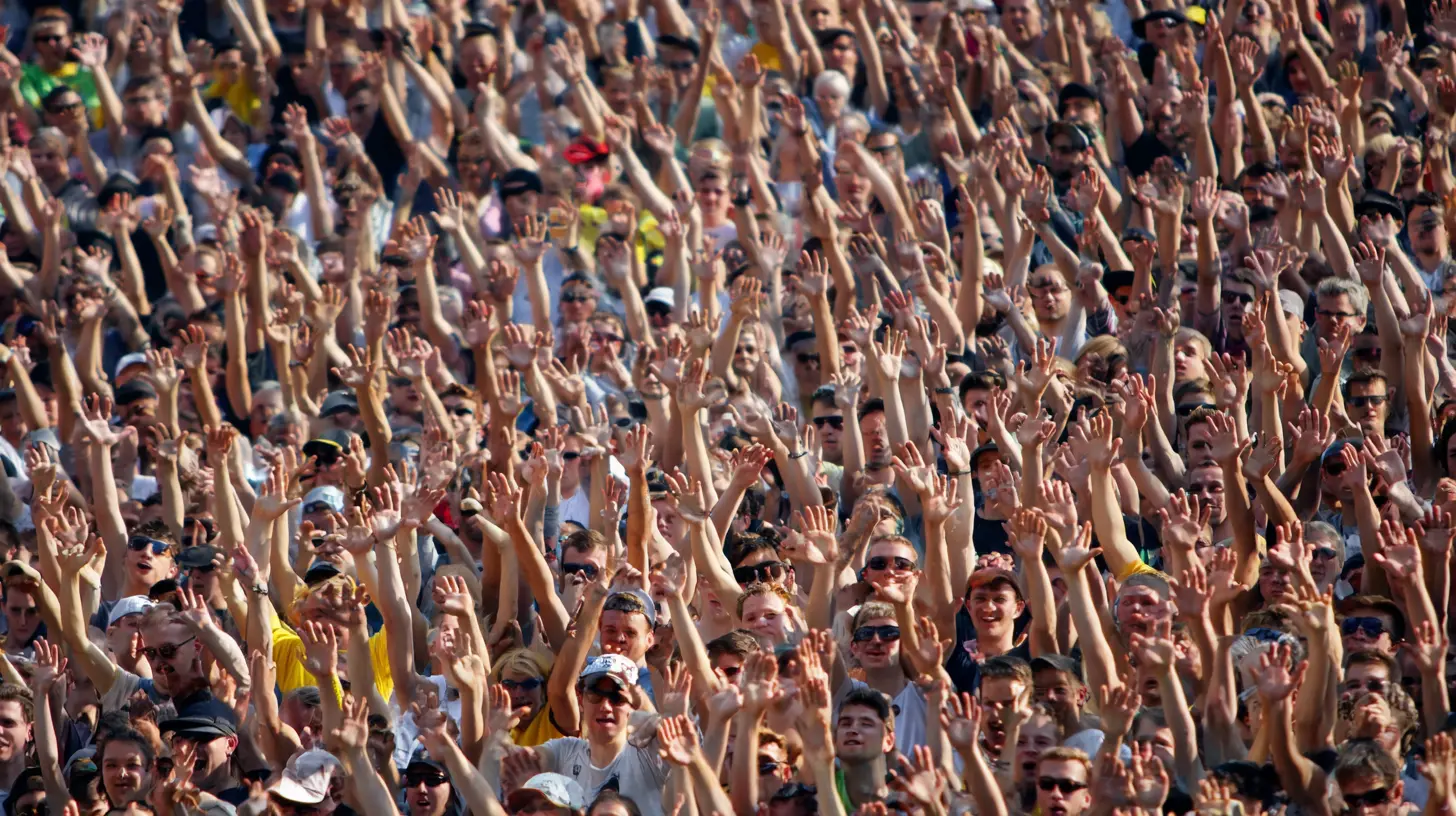
Does the Crowd Actually Change the Scoreboard?
The honest answer is: sometimes, in specific and measurable ways, and less than folklore suggests.Home advantage: real but smaller than assumed
Home advantage exists across most team sports, and crowds are one contributor. But the effect is smaller than most fans believe, and it varies by sport and league. The mechanisms include travel fatigue for the visiting team, familiarity with the venue, referee bias, and crowd influence on player arousal and confidence. Crowd size and noise are part of that mix, but they are not the dominant factor in every sport.This matters for decision-making. A team that invests heavily in maximizing crowd noise without addressing travel, recovery, and venue familiarity is optimizing a secondary lever. The crowd is a multiplier, not a primary cause.
Referee bias: the most documented channel
The clearest mechanism by which crowds influence outcomes is through officials. Research across football and other sports has consistently found that referees tend to award more decisions to home teams, and that this bias increases with crowd size and noise. The effect is not necessarily conscious. Officials are human, and human judgment is sensitive to social pressure, especially in ambiguous situations.The practical implications are significant. Teams should train players to manage referee interactions in hostile environments, and leagues should continue investing in technology and review processes that reduce the weight of ambiguous judgment calls. For officials themselves, crowd-awareness training and structured decision protocols are more useful than simply being told to ignore the noise.
Momentum and arousal: real but fragile
Crowds can shift player arousal and confidence. A loud, supportive crowd can raise effort and reduce anxiety for home players, and a hostile crowd can raise anxiety for visitors. But momentum is notoriously fragile and difficult to measure cleanly. The honest framing is that crowds create conditions that make certain psychological states more likely, not that they reliably produce comebacks.The Dark Side: When Crowd Dynamics Turns Dangerous
Crowd psychology is not always a competitive asset. The same deindividuation and emotional contagion that produce atmosphere can produce violence, and the history of sport includes too many examples of crowd disasters and disorder to treat safety as an afterthought.The conditions that produce disorder
Crowd disorder is rarely spontaneous. It tends to emerge when several conditions align:- High emotional intensity combined with perceived injustice. A controversial decision is a common trigger.
- Anonymity and weak physical barriers. When fans can get close to the field or to opposing fans, incidents increase.
- Alcohol and reduced self-monitoring. These amplify deindividuation.
- Poor crowd flow and crowding at entrances and exits. Physical compression raises stress and aggression.
- A history of rivalry and a sense of grievance. Long-standing tensions lower the threshold for violence.
Understanding these conditions is more useful than moralizing about "bad fans." Most disorder is situational, and situational factors can be designed around.
What effective crowd management actually looks like
The best crowd management is boring and invisible. It includes:- Segregation and buffer zones between opposing fan groups, with stewards trained in de-escalation rather than confrontation.
- Controlled entry and exit flows that avoid compression points. Wide concourses and multiple exits matter more than most people realize.
- Clear communication during incidents, so that uncertainty does not turn into panic or anger.
- Early intervention on small incidents before they escalate. Stewards who build rapport with regular fans are more effective than reactive security.
- Alcohol management that balances revenue against safety, with clear cutoff policies and trained staff.
The trade-off is real: tighter security and segregation can reduce atmosphere. The best venues accept a modest loss of edge in exchange for safety, and they invest in fan culture programs that build self-policing norms among supporters.
Designing for Atmosphere: What Venues Get Right and Wrong
Venue design is one of the most underrated levers in crowd dynamics. Architects and operators can shape noise, sightlines, flow, and social behavior long before a single fan arrives.Acoustic design
Enclosed bowls with roofs and overhangs concentrate sound. Steep stands bring more people closer to the field and create a wall of noise. But there are trade-offs: steep stands can feel intimidating and reduce comfort, and enclosed roofs can trap heat. The best designs balance acoustic intensity with sightlines and ventilation.Fan sections and choreography
Dedicated supporter sections, often behind goals, function as noise engines. They coordinate chants, display banners, and set the emotional tone for the rest of the stadium. Clubs that work with supporter groups rather than against them tend to get more consistent atmosphere. The trade-off is that organized fan culture can also organize hostility, so clear codes of conduct and dialogue with supporter leaders are essential.Flow and the experience outside the stands
Most of a fan's day is spent not watching the game. Entrances, concourses, food queues, and exits shape mood and safety. Long queues and confusing signage produce frustration that carries into the stands. Efficient flow produces a calmer, more positive crowd. This is why venue operators increasingly treat crowd flow as a design problem, not just a security problem.The Digital Crowd: How Second Screens Change the Dynamic
Modern crowds are not confined to the stadium. Most fans in attendance carry a phone, and millions more participate remotely through social media, live chats, and second-screen apps. This changes crowd dynamics in ways that are still being understood.On the positive side, digital participation extends the crowd's emotional reach and can coordinate real-world behavior, such as organized chants or synchronized displays. On the negative side, it can amplify outrage faster than venues can respond, and it can pull attention away from the live event. For athletes, the digital crowd is a constant background presence that can affect mood and performance in ways that are difficult to measure.
The practical advice for teams and venues is to treat digital and physical crowds as one ecosystem. Communication strategies, incident response, and fan engagement should account for both, because a controversy that starts in the stands can escalate online within minutes.
What Athletes and Coaches Should Actually Do
Crowd dynamics is not just a venue and league concern. Players and coaches can prepare for it.For athletes
- Train in noise. Practicing with recorded crowd noise or in loud environments builds familiarity and reduces the startle effect.- Use routines to manage arousal. Pre-performance routines help athletes regulate emotion when the crowd pushes them toward over-arousal.
- Reframe hostility. Athletes who interpret hostile crowds as a sign of respect or as a challenge tend to perform better than those who interpret it as a threat. This is a trainable skill.
- Prepare for referee interactions. Knowing that officials are influenced by crowds helps players manage their own reactions and avoid escalating situations.
For coaches
- Model the crowd's effect on your game plan. If your sport relies on verbal communication, plan silent counts and visual signals for loud road games.- Manage home crowd expectations. Coaches who communicate openly with fans about timing and support can shape crowd behavior over time.
- Do not over-index on noise. Treat crowd support as one variable among many, and invest in the fundamentals of travel, recovery, and preparation.
Common Mistakes and Misconceptions
Several beliefs about crowds are widespread and wrong, and they lead to bad decisions.- "Louder is always better." Timing and coordination matter more than raw volume. Noise during the wrong moments can hurt the home team.
- "Home advantage is mostly the crowd." Crowds contribute, but travel, familiarity, and referee bias are often larger factors.
- "Crowd behavior is just about individual fans." Situational design, flow, alcohol policy, and steward training shape behavior far more than individual character.
- "Security means confrontation." The most effective crowd management is de-escalation and rapport, not visible force.
- "Digital and physical crowds are separate." They interact constantly, and incidents escalate across both.
Best Practices for Organizations
For clubs, leagues, and venues that want to take crowd dynamics seriously, a practical framework looks like this:1. Measure what matters. Track noise levels, penalty differentials, incident rates, and exit times, not just attendance and revenue.
2. Design for flow and safety first. Atmosphere follows from a crowd that feels safe and comfortable.
3. Work with supporter groups. Dialogue produces better outcomes than top-down control.
4. Train stewards in de-escalation. Rapport and early intervention prevent most incidents.
5. Treat digital and physical crowds as one system. Communication and incident response should span both.
6. Accept trade-offs. Tighter security may reduce atmosphere; louder acoustics may reduce comfort. Make those trade-offs deliberately rather than by accident.
The Bottom Line
Crowd dynamics in modern sports is a real science with real competitive and safety implications, but it is also a field full of folklore. The crowd is not a single force that magically lifts home teams. It is a set of psychological, acoustic, and social systems that can be understood, measured, and managed. The organizations that treat it that way, with attention to timing, flow, safety, and the interaction between physical and digital crowds, get more from their supporters and put fewer people at risk. The ones that treat it as a marketing slogan or a security problem tend to get neither atmosphere nor safety reliably. Understanding why crowds behave as they do is the first step toward making that behavior work for everyone involved.
all images in this post were generated using AI tools
Category:
Crowd InfluenceAuthor:

Ruben McCloud
Discussion
rate this article
1 comments
Eloise Wyatt
Crowd energy boosts teams... let's cheer them on together!
October 31, 2026 at 12:03 PM